Leading an AI Strategy Engagement for a California Public Utility
From regulatory mandate to AI-powered implementation plan. The discovery work scoped what became a $10M initiative.
A state mandate with no implementation playbook
California mandated that all government fleet vehicles be electric by 2025. Helix Water District, a public utility, needed to comply, but compliance required far more than vehicle procurement. They needed an intelligent charging infrastructure that could operate around the clock, support emergency response, manage energy costs across seasonal rate structures, and scale as the fleet grew. Vehicles, chargers, energy grids, field crews, IT systems, and regulatory requirements all had to work together.
The question wasn't whether AI could optimize charging. It was whether 17 stakeholders across IT, operations, and field crews could align on what the system needed to do before a single line of code was written.
Three sessions to move from ambiguity to commitment
I designed the engagement arc and facilitated every session, serving as the connective tissue between IBM's technical team (engineers, data scientists, architects) and Helix's operational leadership. Each session built on the last, progressively narrowing from "what's the real problem" to "what are we building first."
Session 1
Business Framing
Mapped every stakeholder from ratepayers to SCADA admins. Co-created personas for the two roles most affected by the transition. Surfaced the assumptions that could kill the project if left untested.
Session 2
Technical Discovery
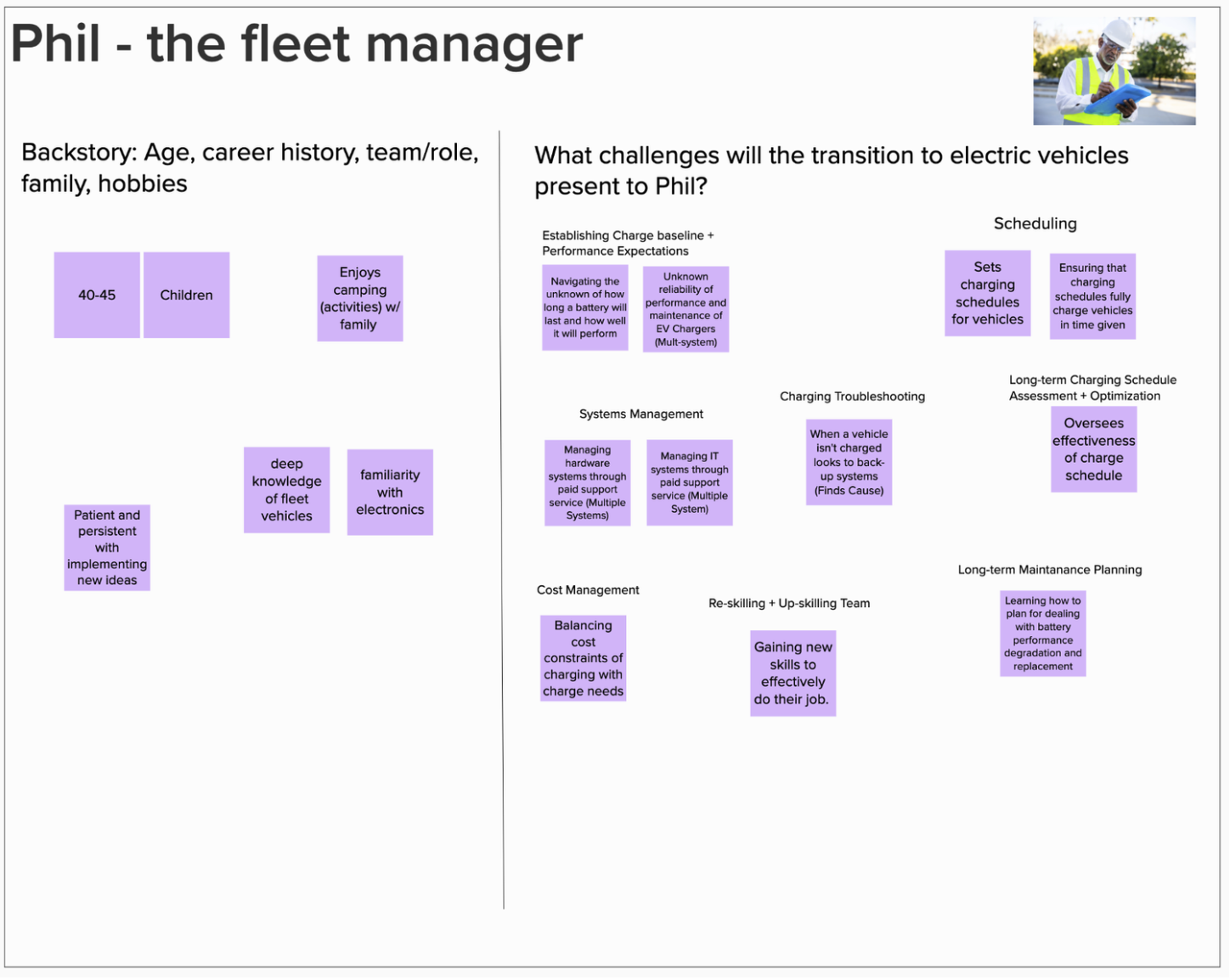
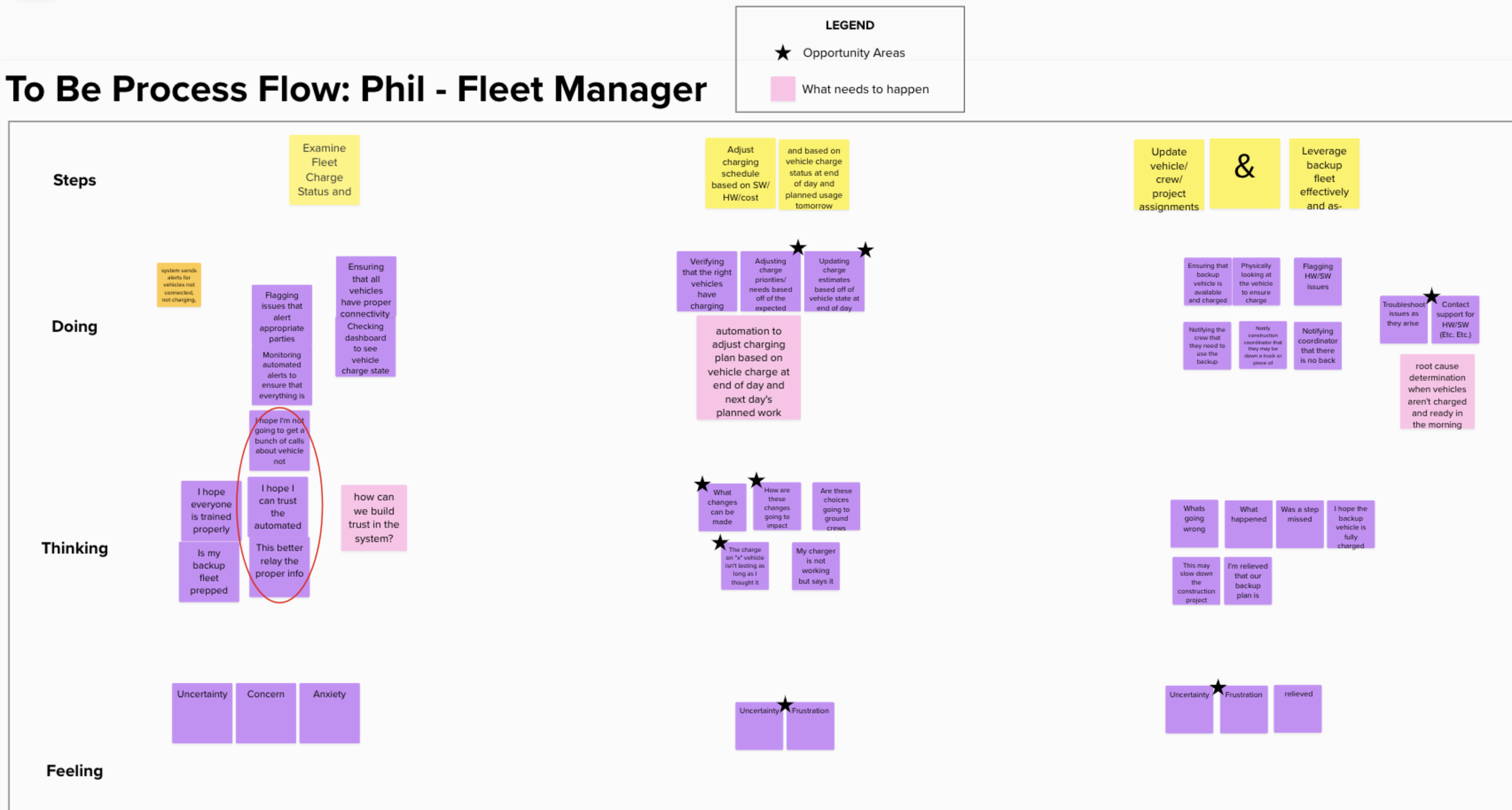
Built future-state journey maps for both personas, surfacing where the system would need to earn trust. Used collaborative ideation and structured voting to make stakeholder disagreements visible and actionable.
Session 3
MVP Planning
Storyboarded two experience flows (predictive intelligence and charging optimization), then plotted every idea on a feasibility grid to separate the MVP from the backlog.
We co-created personas to align a room full of engineers around human needs
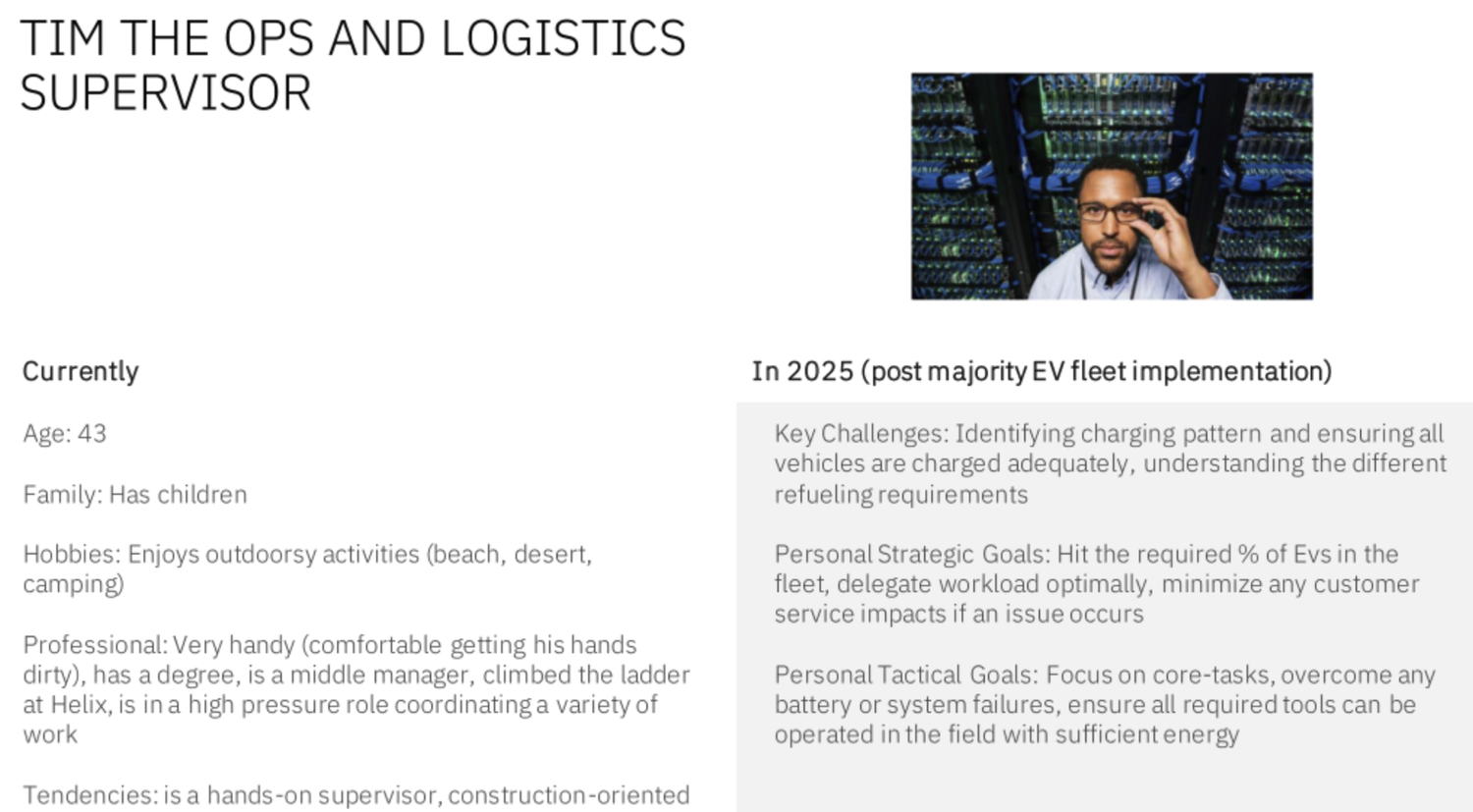
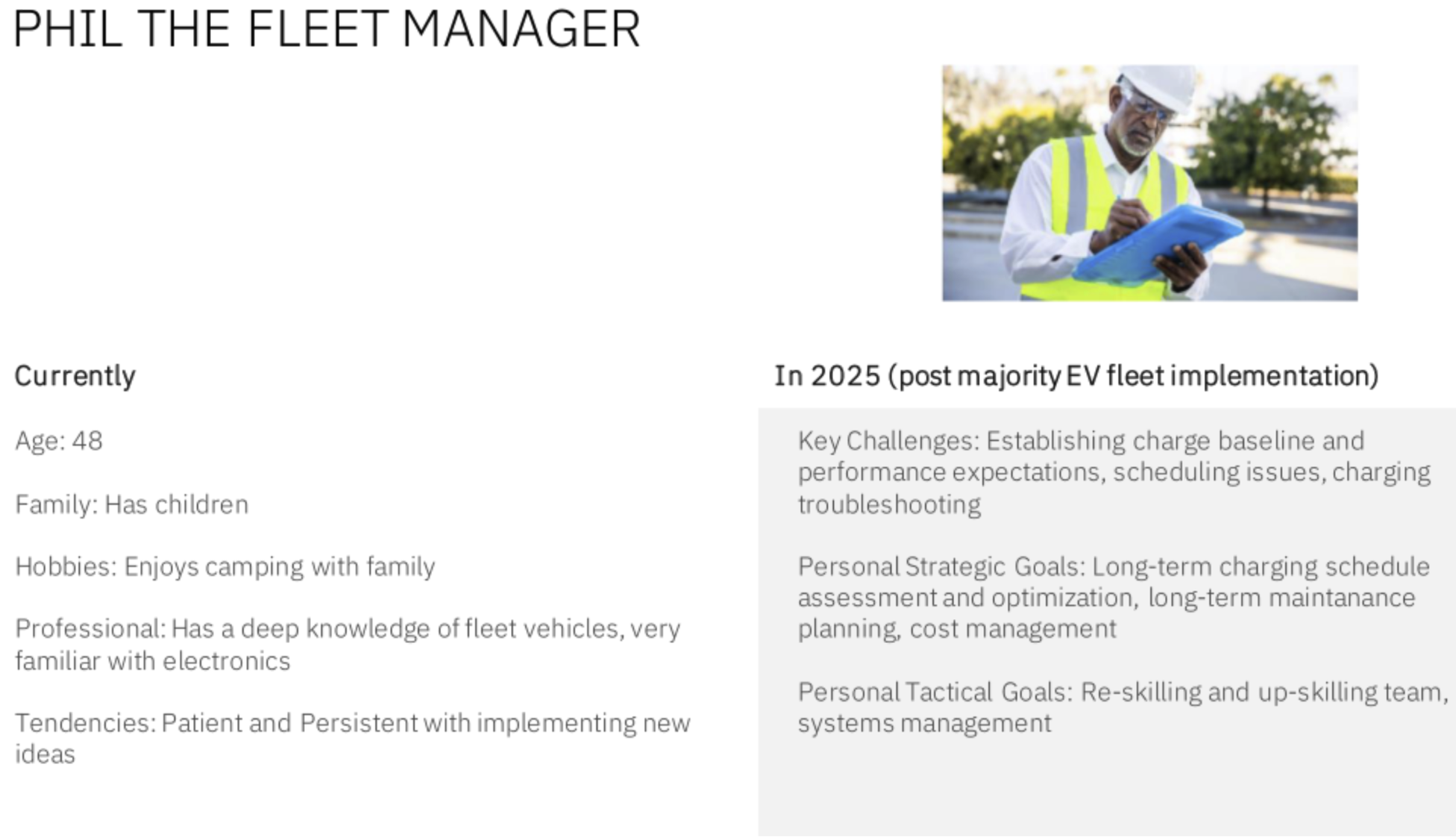
The room included 17 people across both organizations, from IBM engineers and data scientists to Helix's IT director, operations managers, and field technicians. To align this group, we co-created two personas: "Tim" (Operations Supervisor) and "Phil" (Fleet Manager). Every subsequent decision was grounded in how these two people would experience the system.
Three moments where the engagement changed direction
The value of facilitation isn't running the exercises. It's recognizing the moments where the room needs to make a decision and creating the conditions for that decision to happen. Three moments shaped this engagement:
The journey map surfaced a trust problem. When we mapped Phil's future-state workflow, the team realized the biggest barrier wasn't technology. It was whether field crews would trust an AI system to have their vehicles ready for emergency response. That reframed the entire system design around transparency and override capabilities.
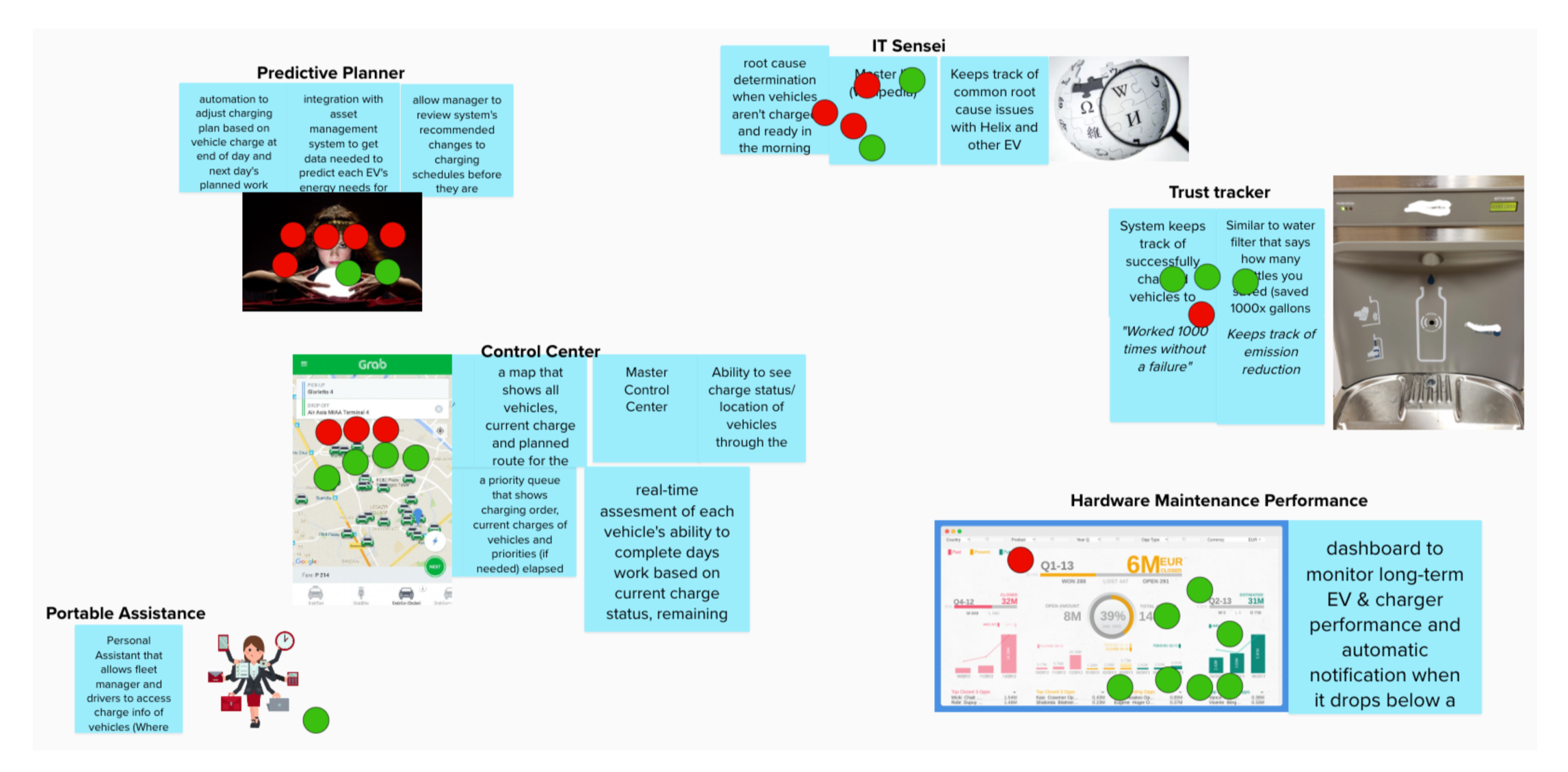
Dot voting revealed misaligned priorities. Engineers prioritized system monitoring and diagnostics. Operations staff prioritized override controls and schedule flexibility. Making those differences visible in the room, rather than resolving them behind closed doors, gave leadership the clarity to make the right trade-offs for the MVP.
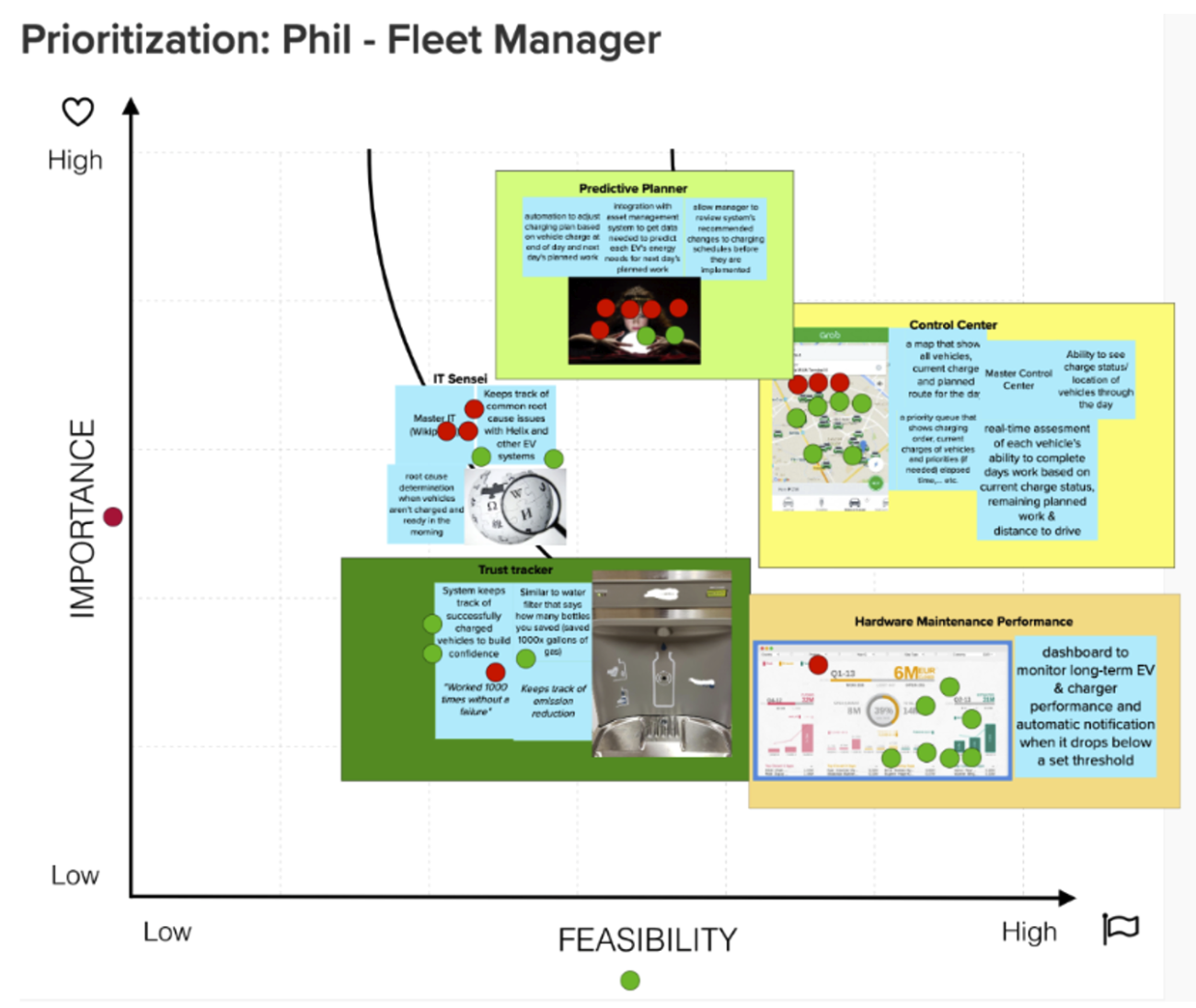
The prioritization grid defined what "done" looked like. By plotting every idea on an importance-vs-feasibility matrix, we helped the team separate the "no-brainer" MVP features (real-time charge status, failure alerts, root cause identification) from the "big bets" that needed more validation (predictive scheduling, cost optimization). That split became the backbone of the phased roadmap.
A prototype and executive playbook that secured $10M in funding
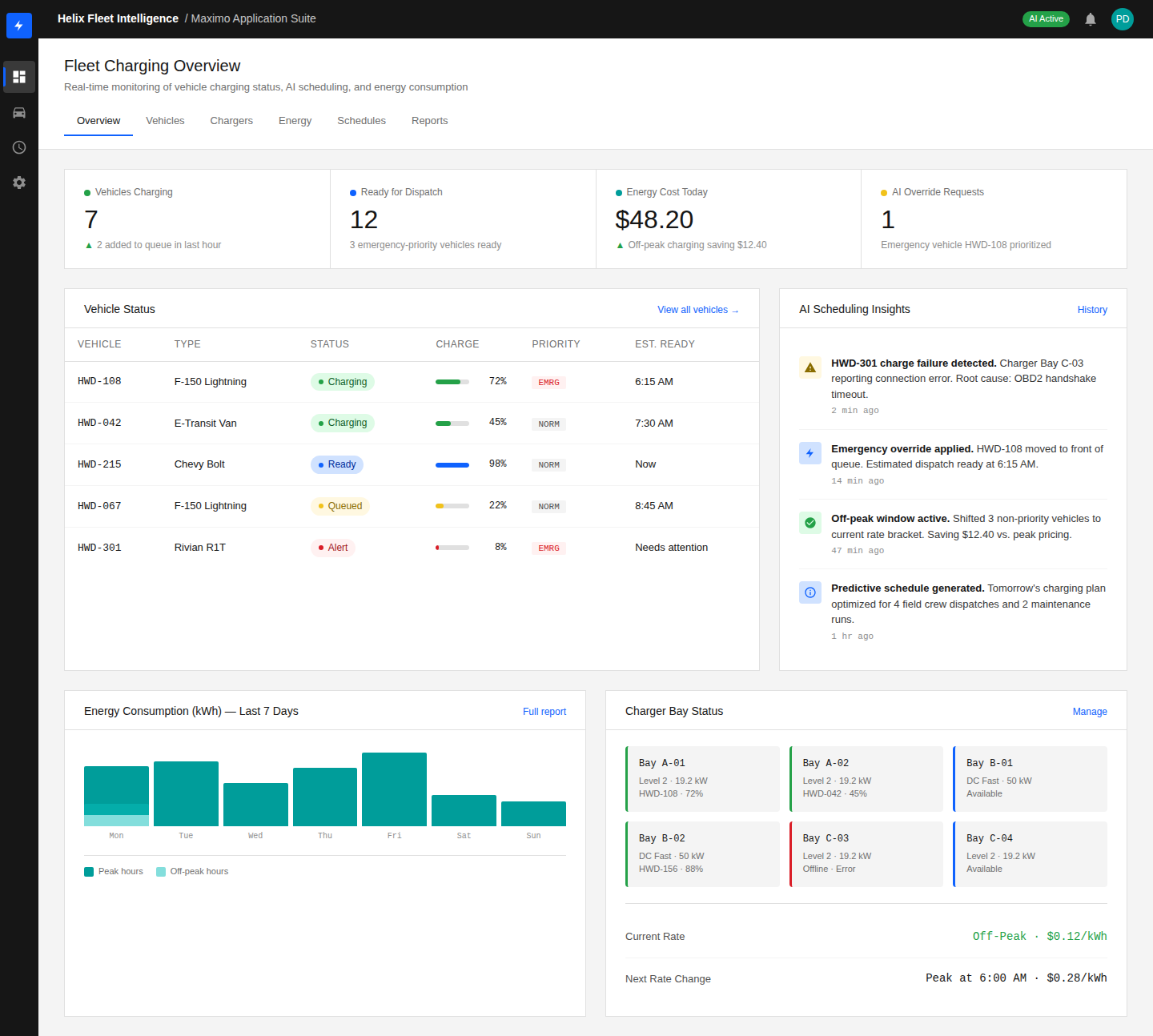
We built a working prototype on IBM's Maximo Application Suite that unified vehicle status, charge progress, job scheduling, and AI-driven prioritization into a single view. For the first time, Helix leadership could see how the system would work: which vehicles were charging, which were ready for dispatch, and how the AI was making trade-offs between energy cost and operational readiness.
The prototype and executive playbook together became the artifacts that moved leadership from "we're exploring this" to "we're funding this."
The gap between the ask and the actual problem
What the client asked for
"Help us figure out how to charge our electric trucks." A technical implementation question.
What the engagement actually required
Aligning 17 people across two organizations around a shared vision for how AI would change daily operations, and building trust in a system that didn't exist yet.
This project was featured internally at IBM as a model of how design strategy drives business development. The discovery work didn't just define the MVP. It built the organizational conviction to act.
The most impactful AI strategy engagements don't start with the technology. They start with the room, the people, and the question no one has been willing to ask out loud.