The Display Market Was Shifting. We Found Out Where to Invest Next.
A global consumer electronics company needed to understand what people would actually do with next-generation display technology before committing to a product direction. As a senior strategist on a five-person team, I helped design the research, conducted in-home ethnographic interviews, led synthesis, and shaped the strategic framework that defined the product line.
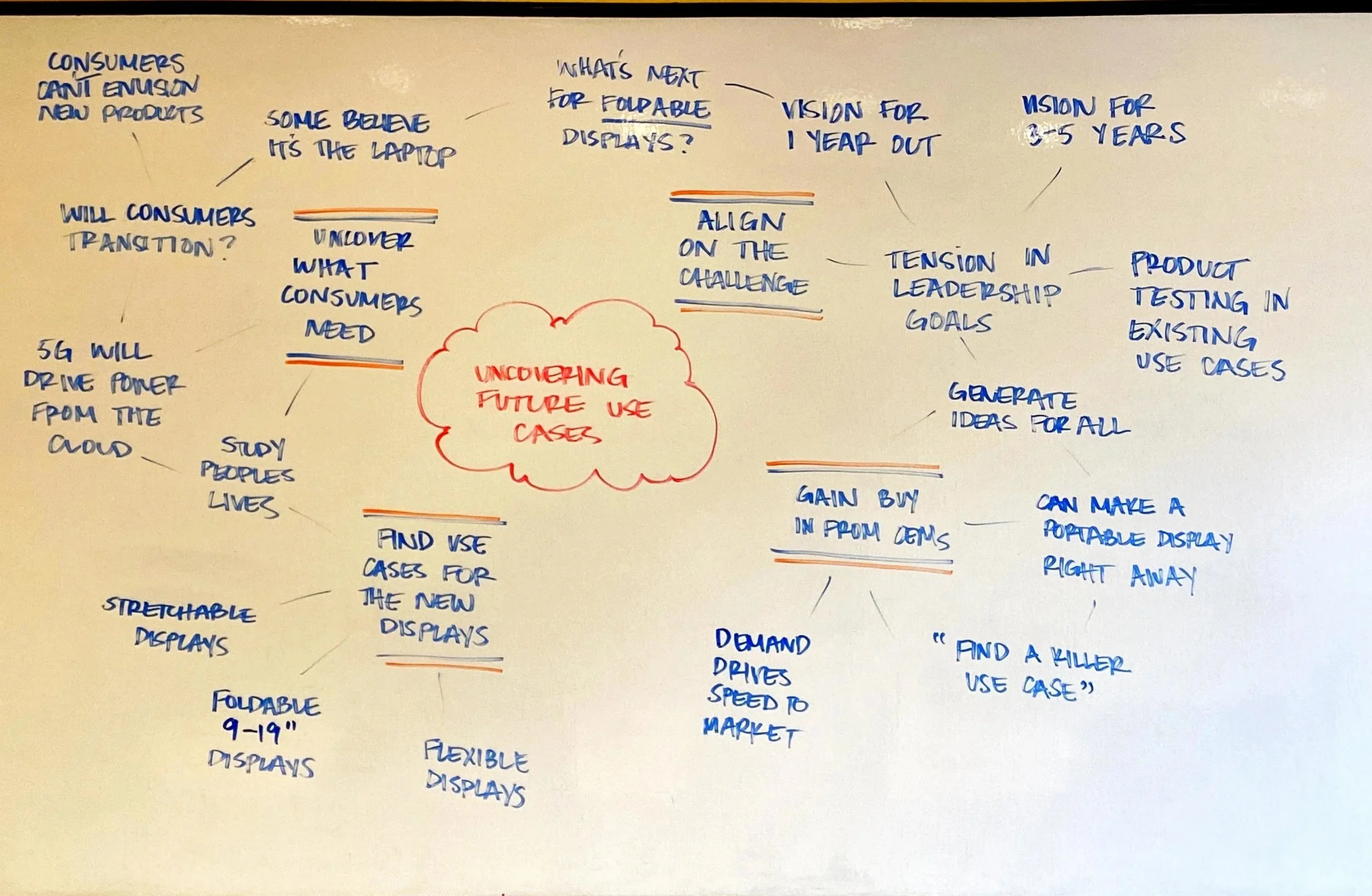
The display market was changing fast. Leadership needed to know where to invest next.
The client held a leading position in the display market. New screen technologies were emerging fast: foldable displays, portable high-quality screens, flexible form factors. Leadership had a one-year product vision and a three-to-five year horizon to plan against, but genuine tension internally about where to place their bets and how to build conviction with manufacturing partners.
The question they brought us was not technical. It was human: what will people actually do with next-generation display technology, and which consumers should we build for first?
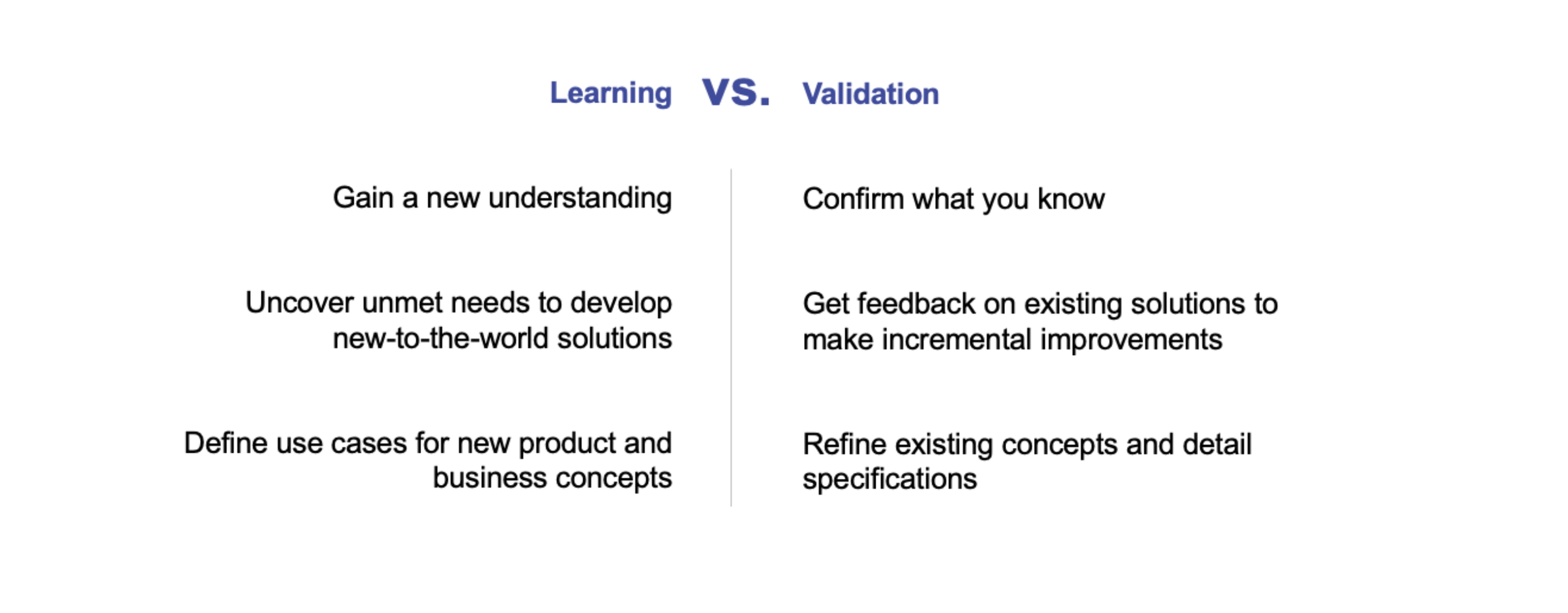
We started by learning, not validating.
Most product strategy work starts with a concept and asks: will this sell? We started earlier, with what we did not know.
The logic: study the consumers with the most demanding display needs today, and you surface patterns that predict how the broader market will use new technology in the future. This is called lead user research. It is the difference between confirming assumptions and discovering something genuinely new.
I was one of two senior strategists on the team, brought in for my background in industrial design and business. I was involved across all phases: research design, in-home interviews, synthesis, scenario development, and the final strategic recommendation.
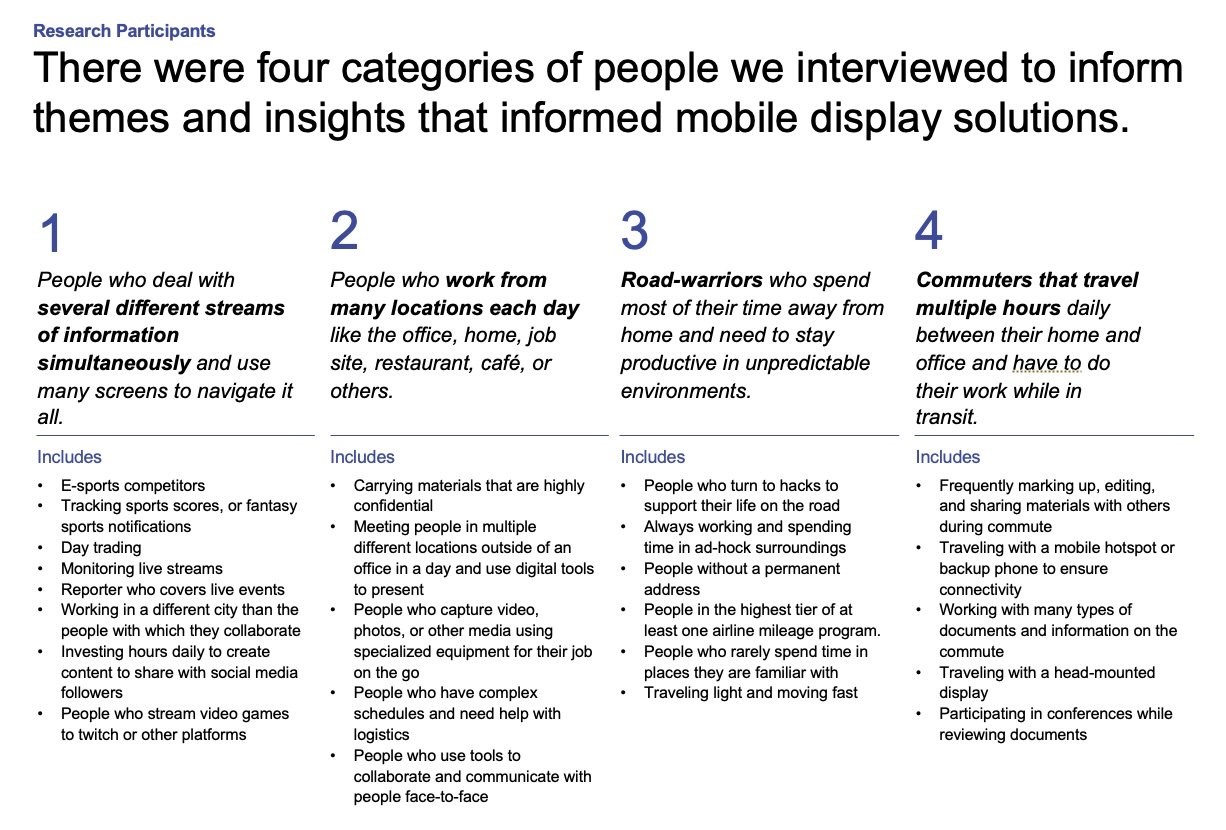
Participant selection was deliberate.
We recruited across four behavioral categories: people managing multiple simultaneous streams of information, people working from many different locations in a single day, road warriors who spend most of their time away from a fixed office, and daily commuters doing substantial work in transit. These were people who had already pushed their devices hardest and developed the strongest habits, workarounds, and frustrations.
Three shifts the market was missing.
Across 12 in-home interviews, three patterns showed up consistently. None of them were surprising in isolation. What was surprising was how clearly they all pointed to the same unmet need.
Work is more mobile than the display market assumes.
The industry was still building for a world where people sit at a desk. The research showed that world was already gone.
Even people with a fixed address do not have a fixed spot.
The assumption behind most display design is that mobility means travel. What we found was subtler: even people working from a single building rarely stay in one place. The equipment they relied on had not caught up.
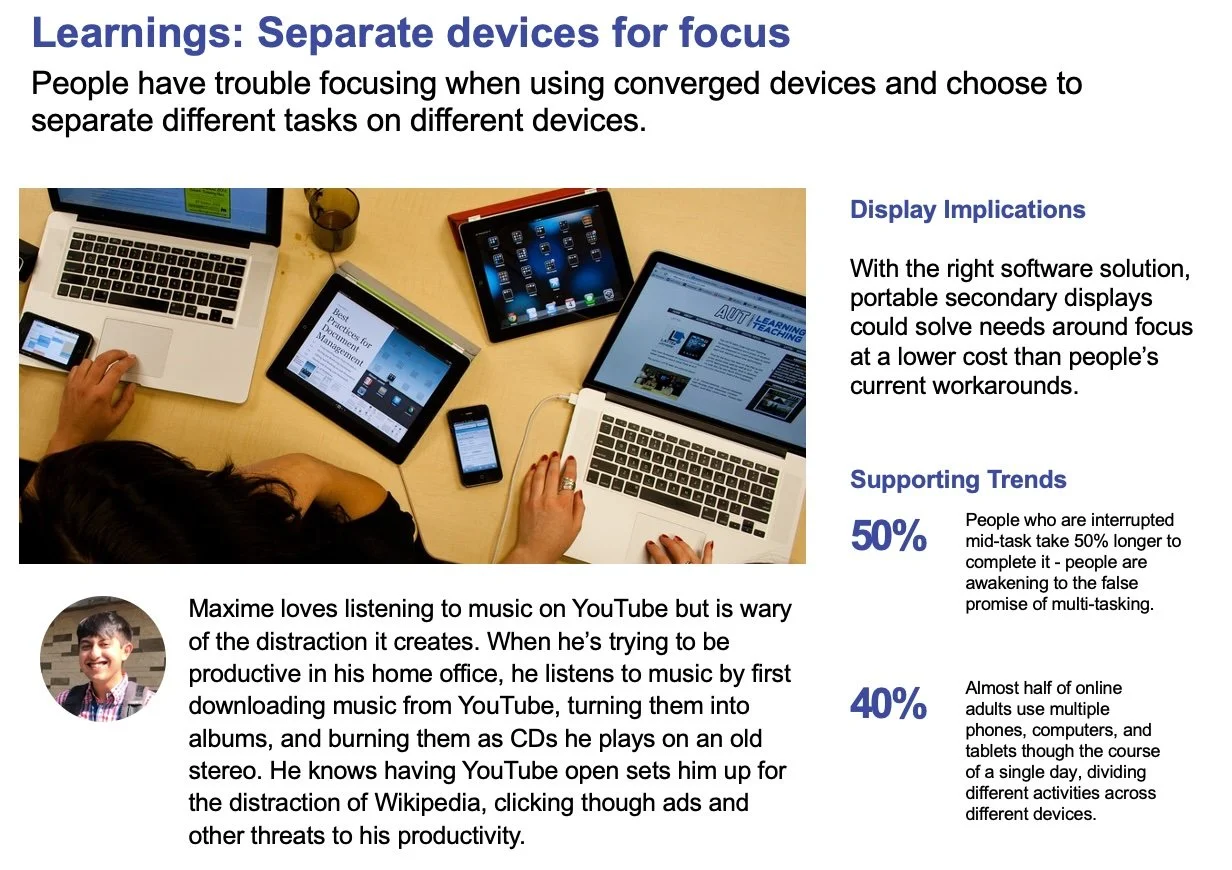
People are deliberately solving the focus problem themselves.
People have not been waiting for the industry to catch up. They have been improvising. And the workarounds they have built tell you exactly what a good solution would need to do.
The findings pointed in the same direction. The framework told us who to build for.
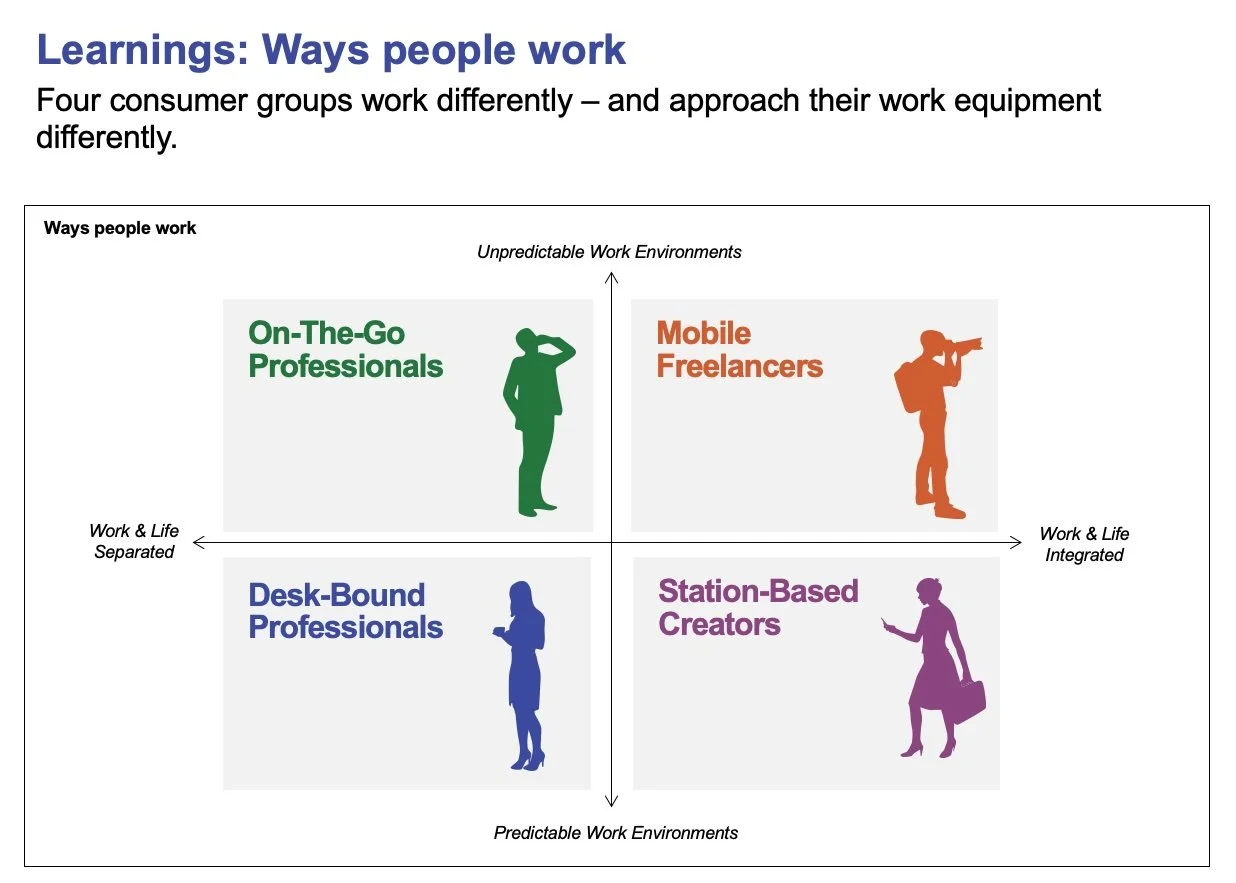
The three findings were consistent, but they did not yet tell us which consumers to prioritize. To answer that, we needed to understand how the underlying differences in how people work shaped their relationship to displays.
Two dimensions emerged from the research as the most predictive: how predictable or unpredictable a person's work environment is, and whether they treat work and life as separate domains or as integrated parts of the same day.
Three of the four segments. Not all four.
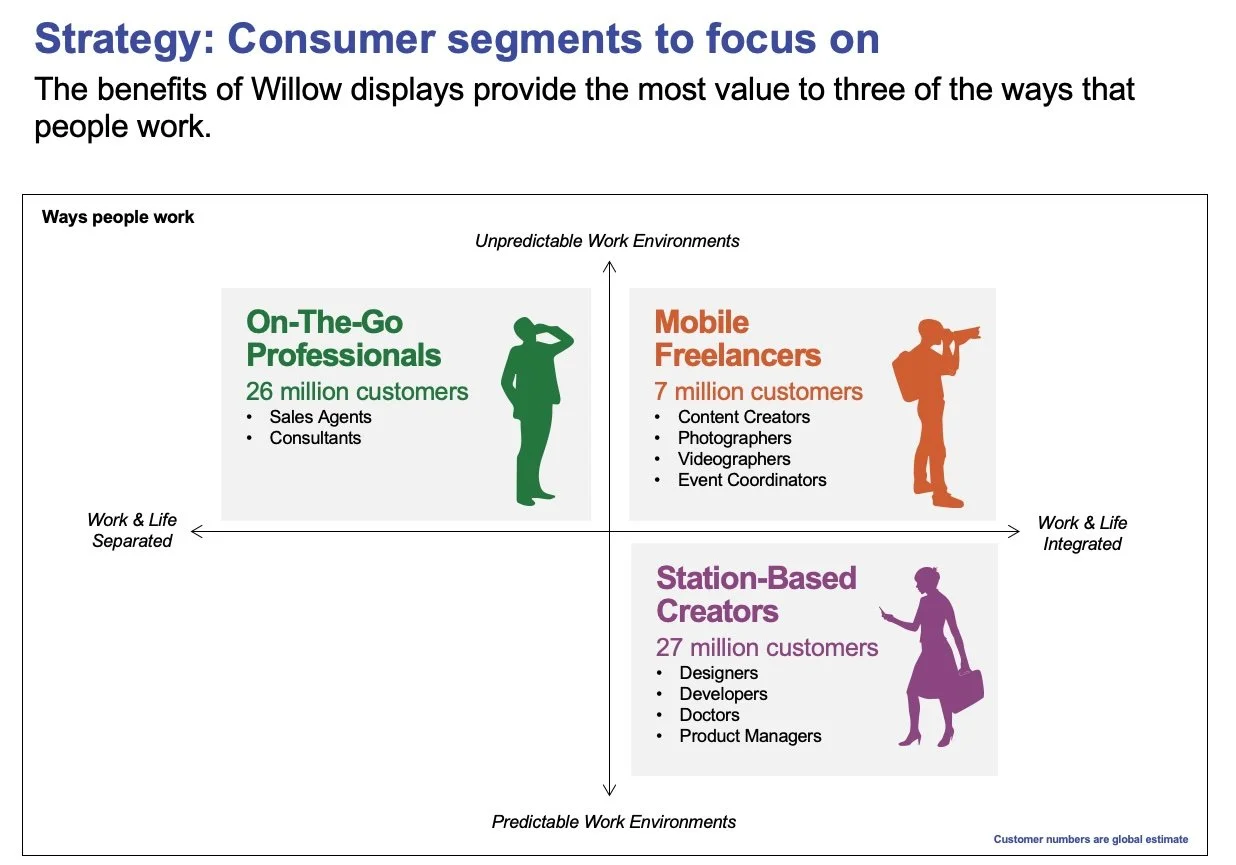
With the framework in hand, the strategic question became: which of these groups has the strongest unmet need for a portable, high-quality display, and which do we build for first?
Three of the four. Desk-Bound Professionals work in predictable environments with well-established fixed setups. Their needs are already served. The other three segments each showed significant unmet needs, and together represented over 60 million potential customers globally.
The research defined the product.
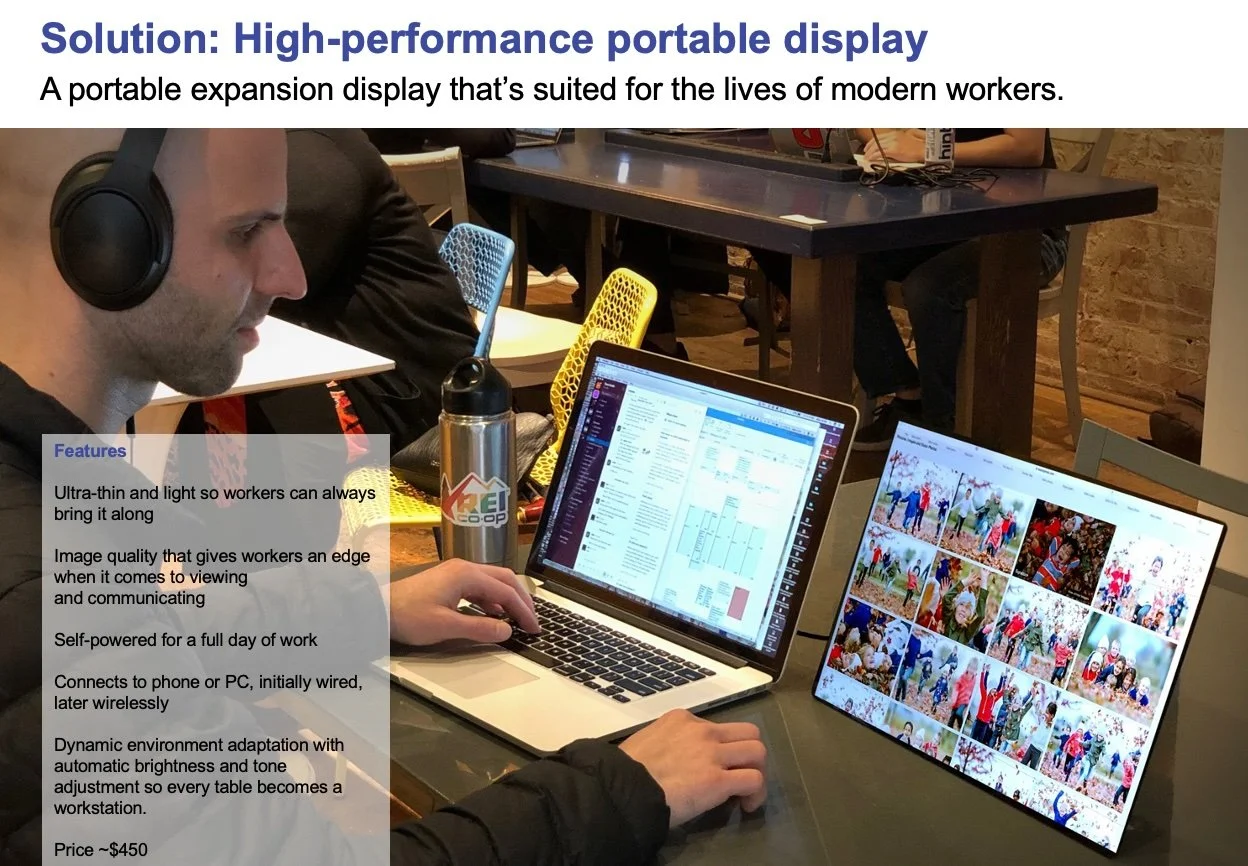
A high-performance portable expansion display built for modern workers: ultra-thin and light enough to carry anywhere, self-powered for a full workday, display quality that gives workers a professional edge in any environment, priced around $450.
The roadmap extended the strategy across three phases, each tied back to the consumer segment framework.
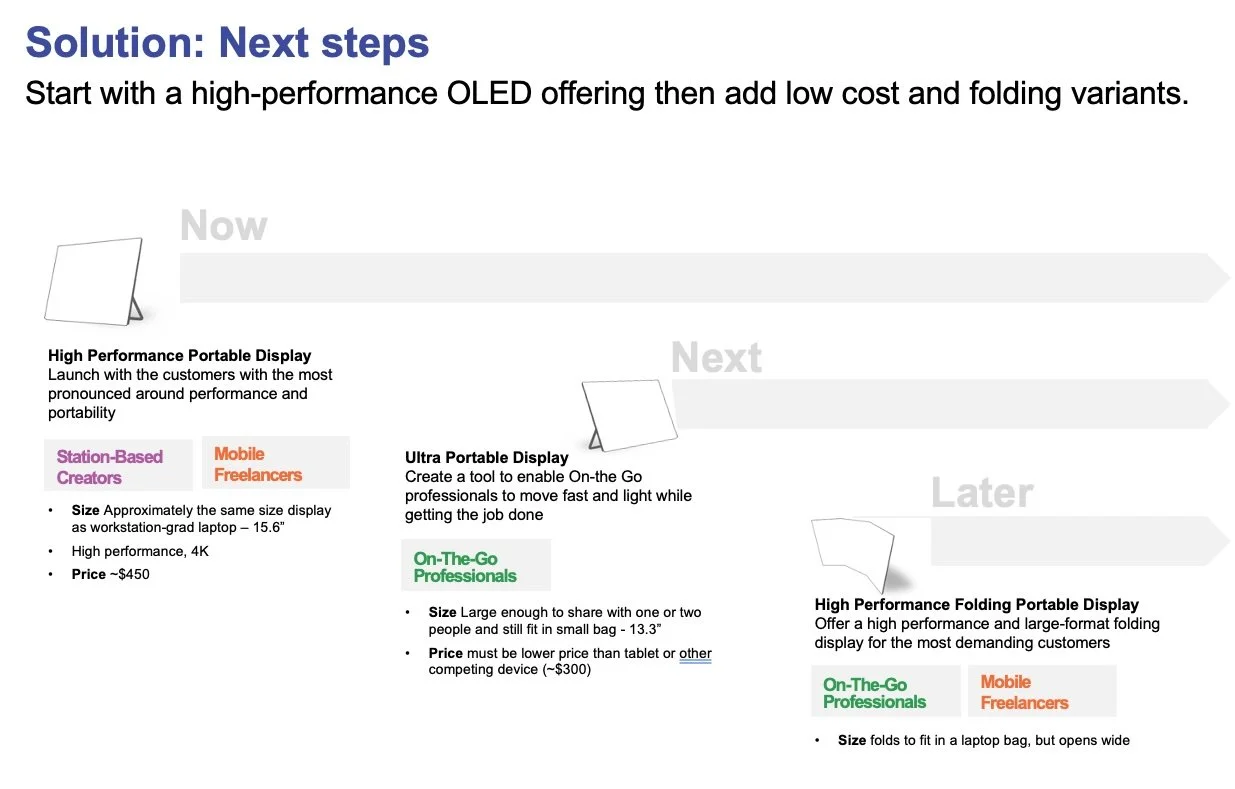
Outcome: The product line informed by this research launched and performed well commercially. The work is under a confidentiality agreement, so specific figures stay private. The strategic direction held.
What the research actually did.
The leadership team arrived with real questions and genuine tension about the right direction. That tension is visible in the whiteboard at the start of this case study. The research did not just answer the question. It gave the team something more durable: a shared picture of who their customers actually are, grounded in what those people do in their real lives.
The decision to leave Desk-Bound Professionals out of the strategy was only possible because the research made it defensible. Strategy is as much about what you do not build as what you do.
The best product strategies do not start with technology capabilities. They start with watching people improvise solutions to problems the market has not named yet.