Consumer Strategy for a Leading Canadian Retailer
Understanding the emotional drivers behind brand loyalty for one of Canada's largest health and beauty retailers, with 1,750+ pharmacies and 5,000 health and wellness professionals.
Growth was strong. The question was why.
Note: This retailer is referred to as "Star Mart" throughout the project artifacts shown below, a pseudonym used to protect the client's identity.
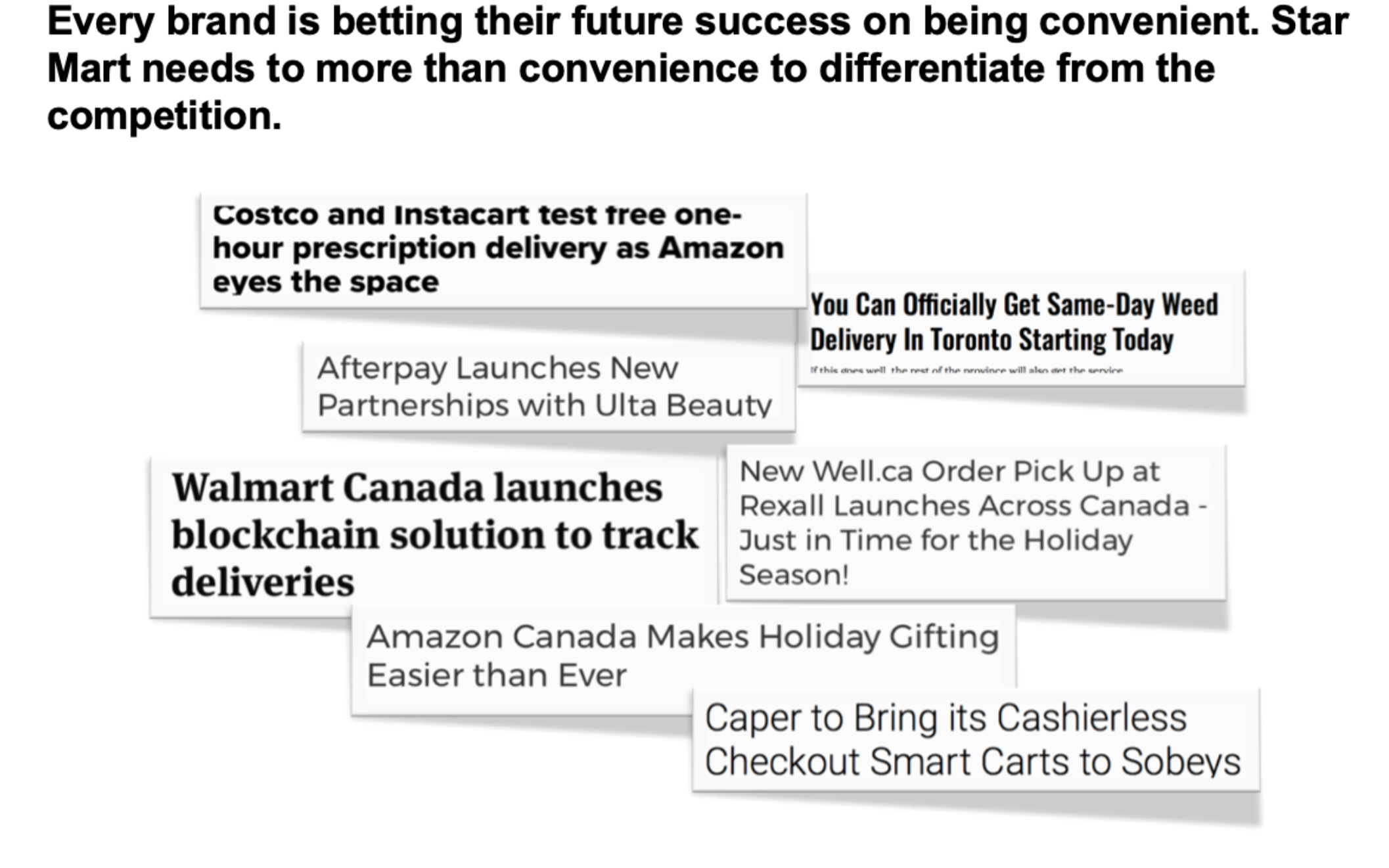
This retailer had enjoyed many quarters of sustained growth, but the leadership team didn't understand why Canadians chose their brand over competitors. They had historically bet on convenience, but so had everyone else. Amazon, Costco, Walmart Canada, and Instacart were all making the same play.
The leadership team wanted to uncover the emotional drivers behind customer loyalty. Not just why people shopped there, but what the brand meant to them. That answer would become a platform for future growth across 1,750+ locations.
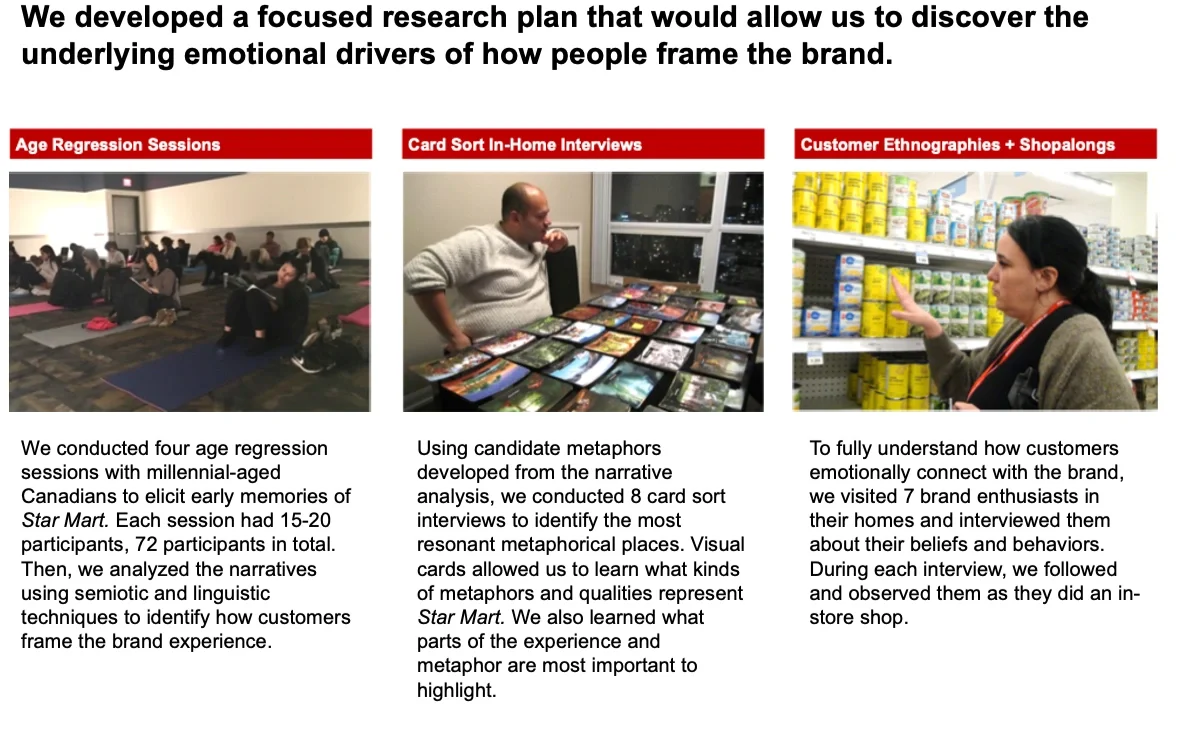
We designed research to surface the emotional associations customers already hold
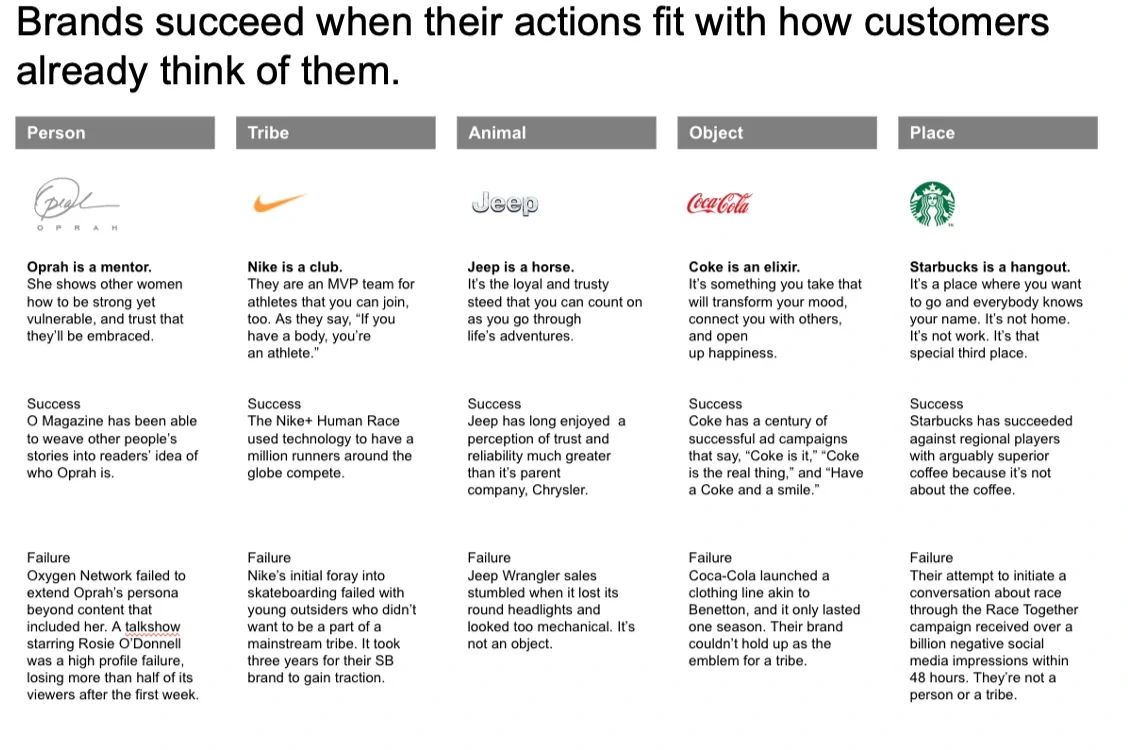
People map brands to things we're wired to understand: a person, a tribe, an animal, an object, a place. Brands succeed when their actions fit with how customers already think of them. We designed a multi-phase research program to surface these unconscious associations.
I was one of two senior strategists on the team and was involved in all phases: field research, in-depth interviews, card sort sessions, customer ethnographies and shop-alongs, narrative analysis and research synthesis, stakeholder engagement, workshop design and facilitation, and strategic recommendation.
From hundreds of stories to a single unifying metaphor
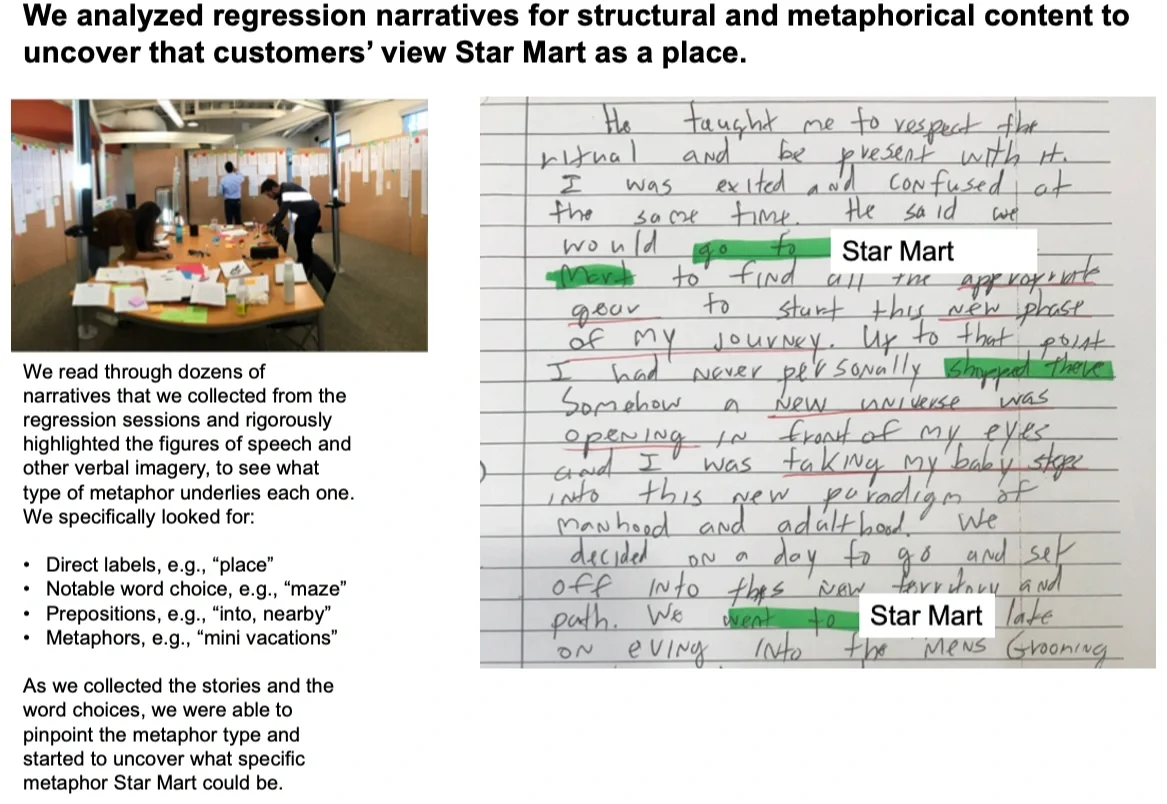
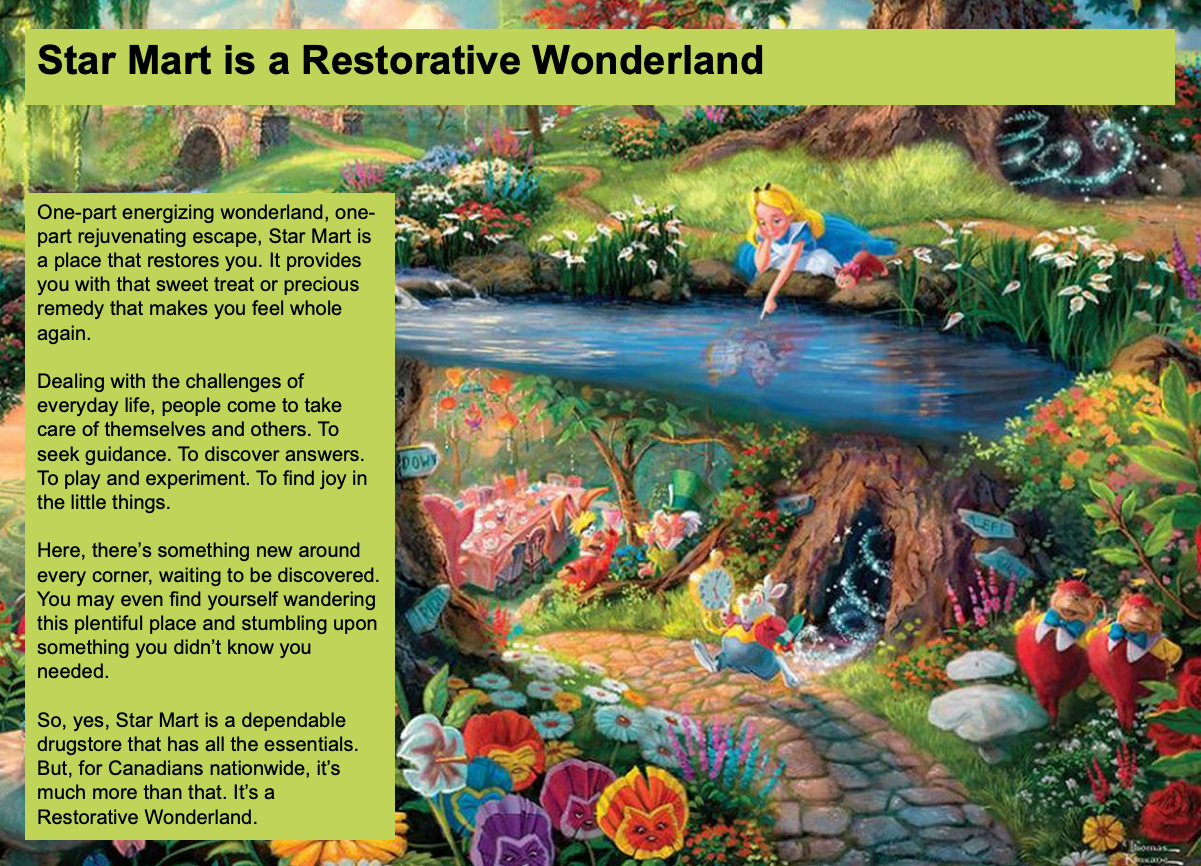
We analyzed dozens of narratives using semiotic and linguistic techniques, looking for the metaphor types underneath the words: direct labels, notable word choices, prepositions, figures of speech. Combined with the card sort data and ethnographic observations, the analysis surfaced five key brand attributes and a unifying metaphor.
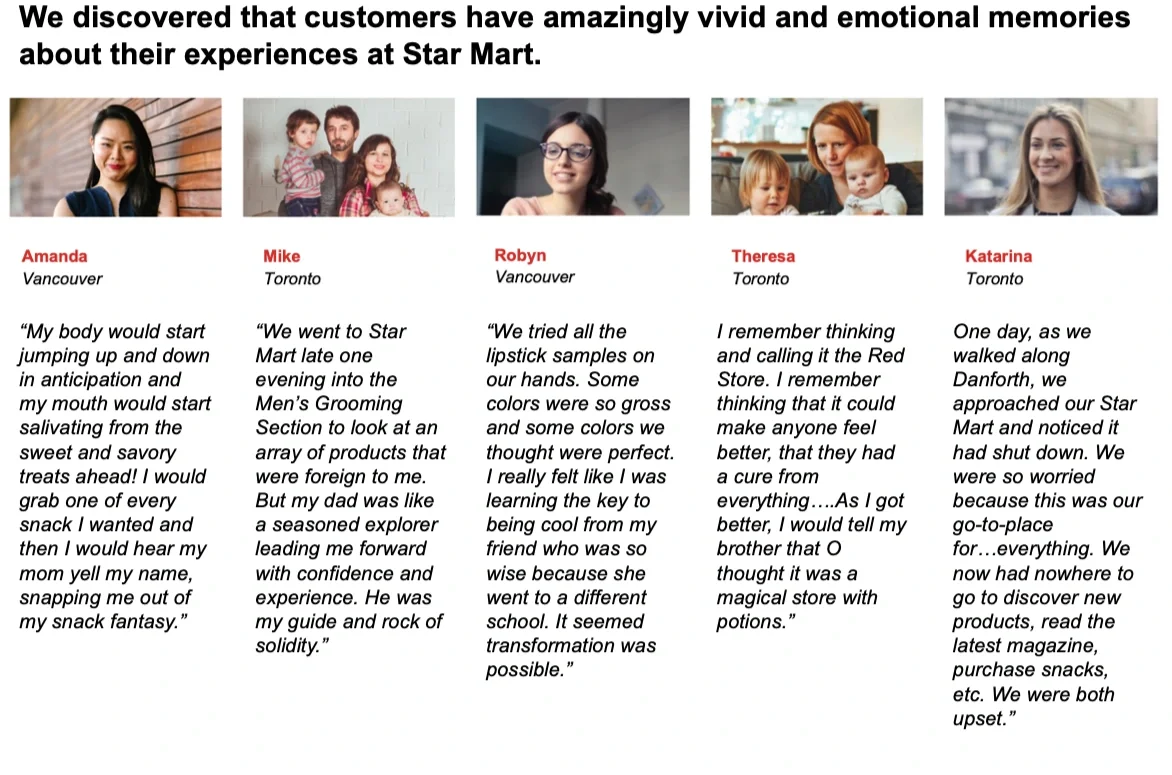
Customers didn't describe a drugstore. They described a world.
It's like going into this strange world for a five minute vacation.
MEGHAN, 37, TORONTO
These weren't stories about convenience. Customers described childhood snack fantasies, fathers guiding sons through grooming aisles "like a seasoned explorer," the devastation of a favorite location shutting down. They were stories about identity, comfort, discovery, and belonging.
We turned the metaphor into an actionable brand strategy
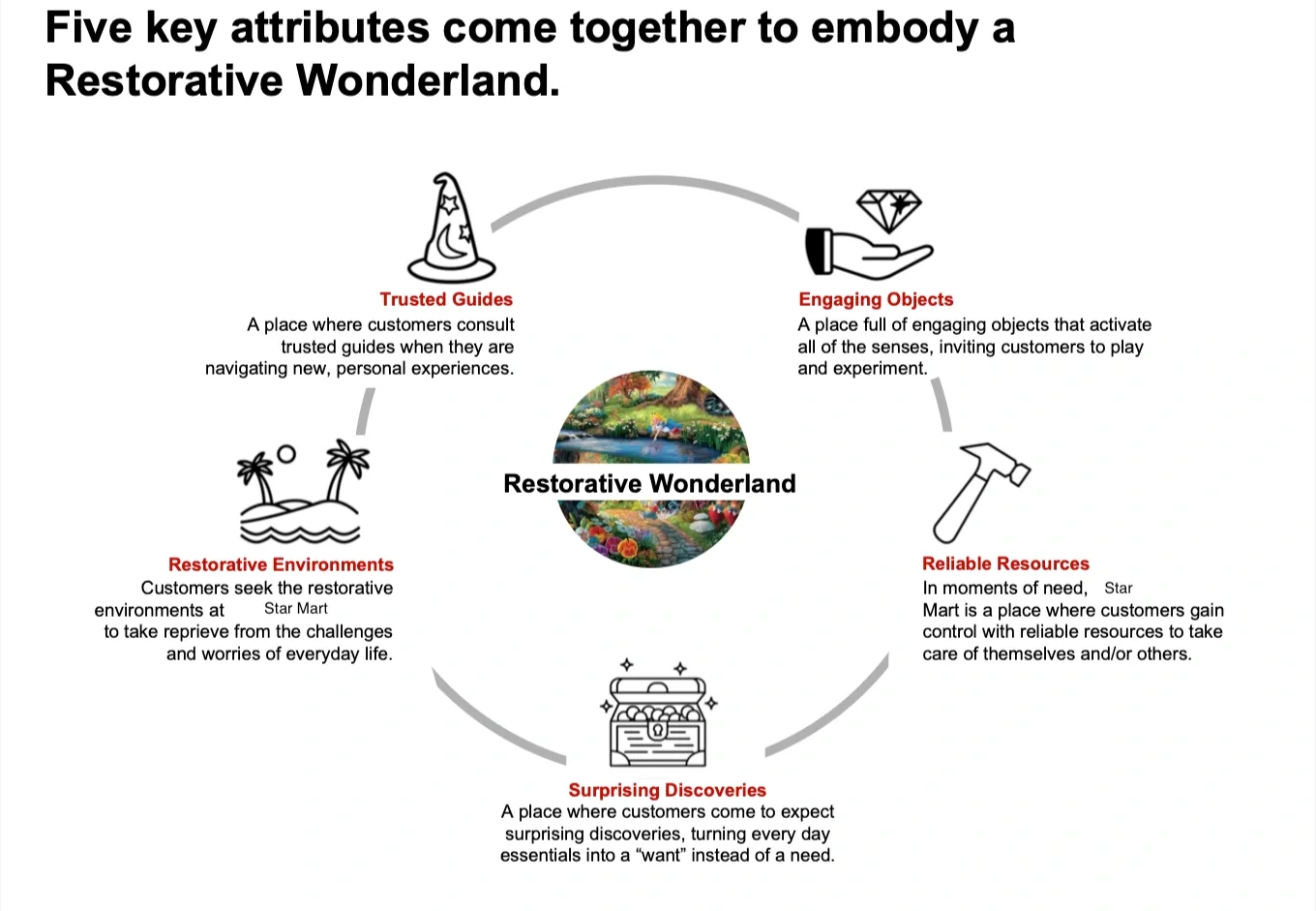
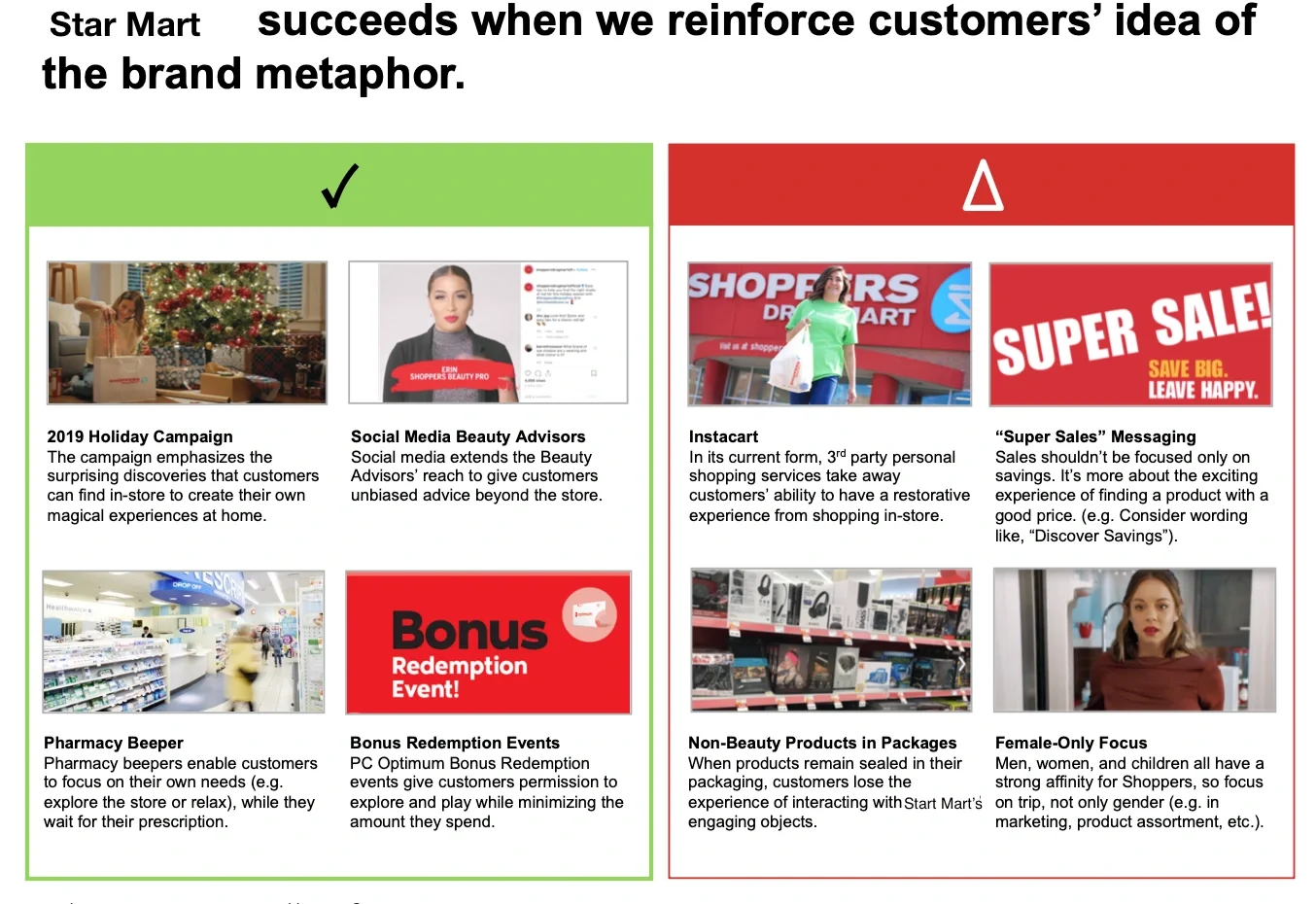
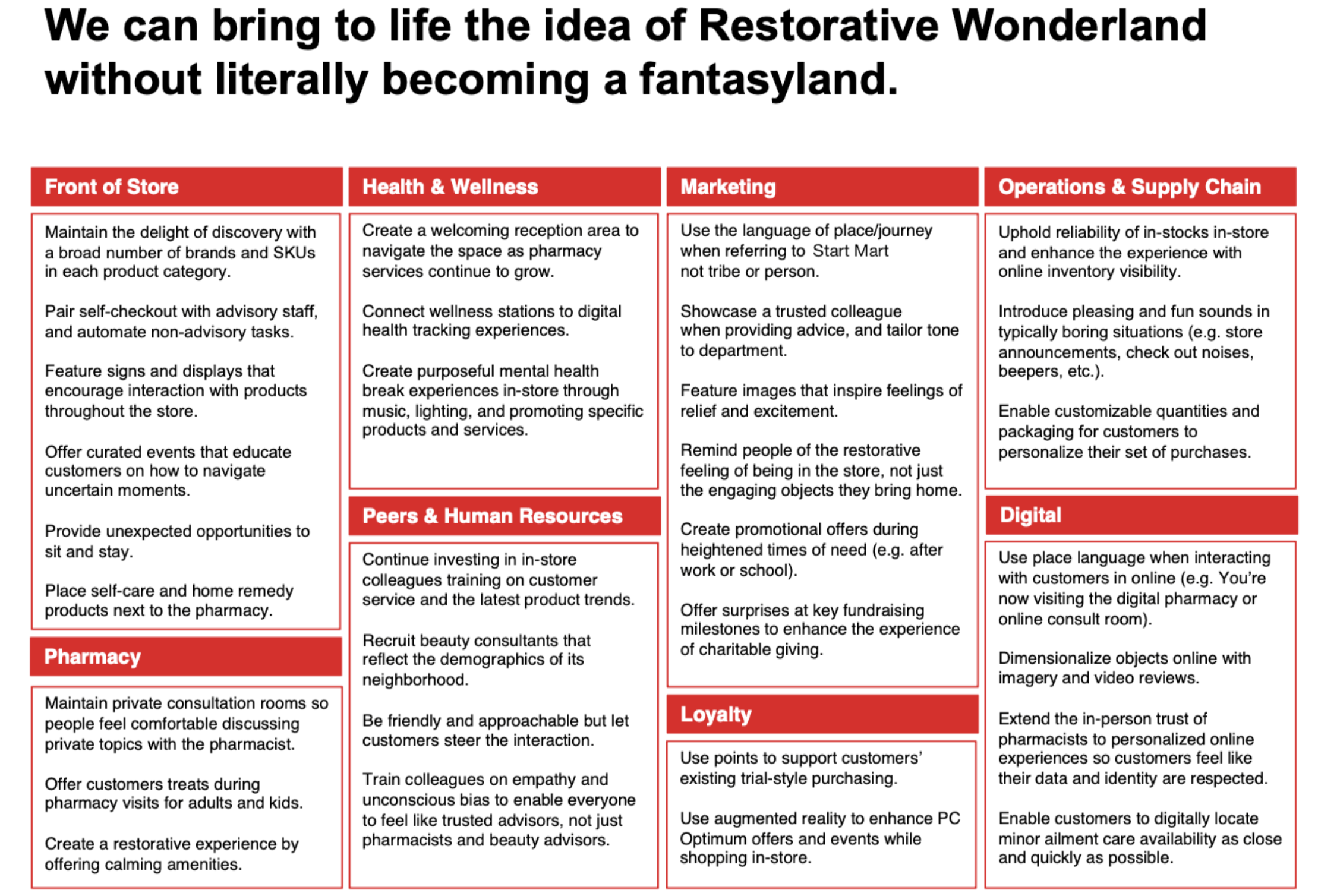
The research surfaced five attributes that gave the metaphor its structure. We evaluated every existing brand initiative against these attributes, then delivered an activation roadmap across eight business areas showing leadership exactly where to invest and where to course-correct.
The brand built what the framework recommended
Beauty Clinic
Launched cosmetic dermatology locations, making specialized treatments accessible through a trusted retail setting.
440+ Beauty Boutiques
Expanded immersive, discovery-oriented beauty departments across the store network.
Wellwise
Created a standalone wellness retail concept for aging Canadians, extending the restorative experience.
$2.4B in 2026
Parent company announced major expansion including 34 new locations, deepening the experience customers already valued.
Two prompts, two entirely different strategies
The rational prompt
"Reliable." "Clean." "Safe." Strategy built here leads to the same convenience play every competitor was already making.
The emotional prompt
Childhood snack fantasies. Fathers guiding sons through grooming aisles. The devastation of a favorite store closing. Strategy built here opens entirely new territory.
When senior leaders heard their own customers describe the brand as "a five minute vacation," the conversation shifted from "what should we be?" to "what do our customers already believe we are?"
The most powerful brand strategies don't invent a new story. They discover the story customers are already telling, then build a world that makes it come true.