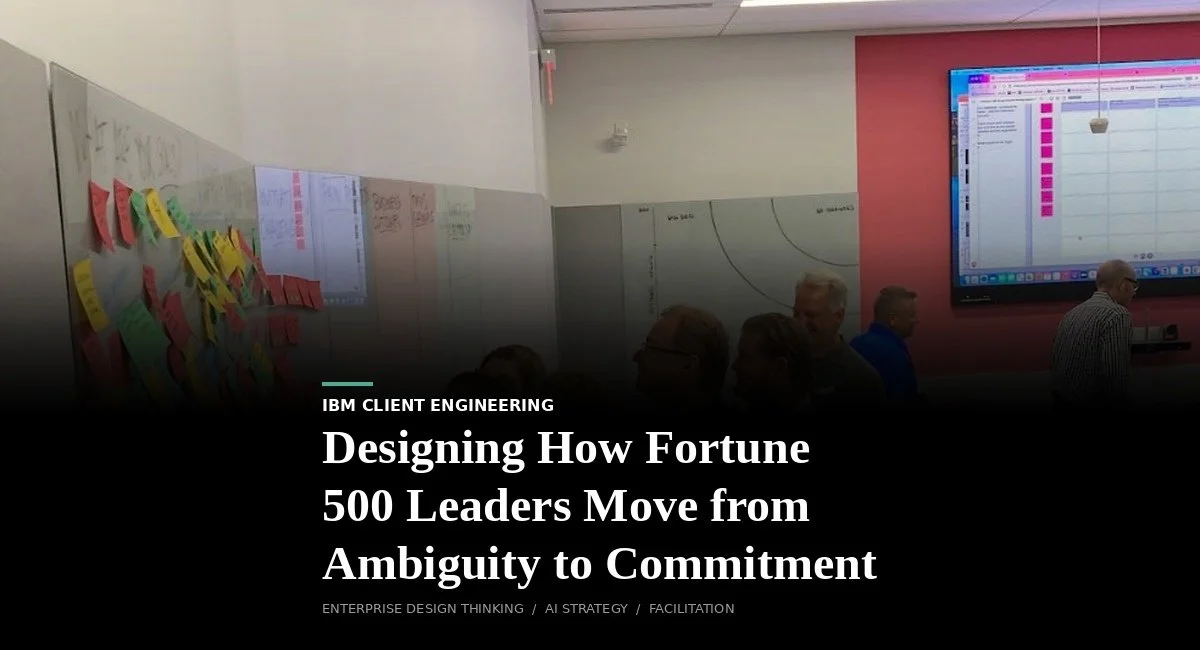
Designing How Fortune 500 Leaders Move from Ambiguity to Commitment
Over four years, I led 100+ executive transformation engagements, designing the strategy, facilitation, and research that turned messy cross-functional problems into funded roadmaps.
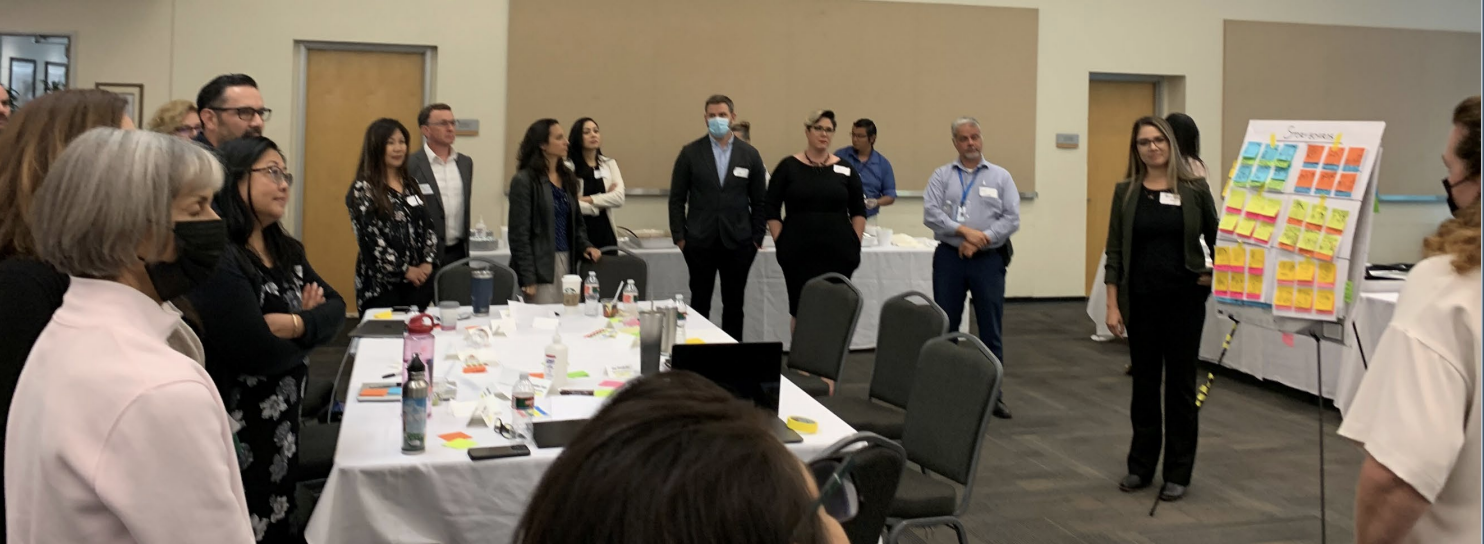
This is not a single project. It's a practice.
IBM Client Engineering is where Fortune 500 executives bring their hardest problems: an AI transformation with no starting point, a healthcare system that can't see its own bottlenecks, a government agency mandated to electrify with no roadmap.
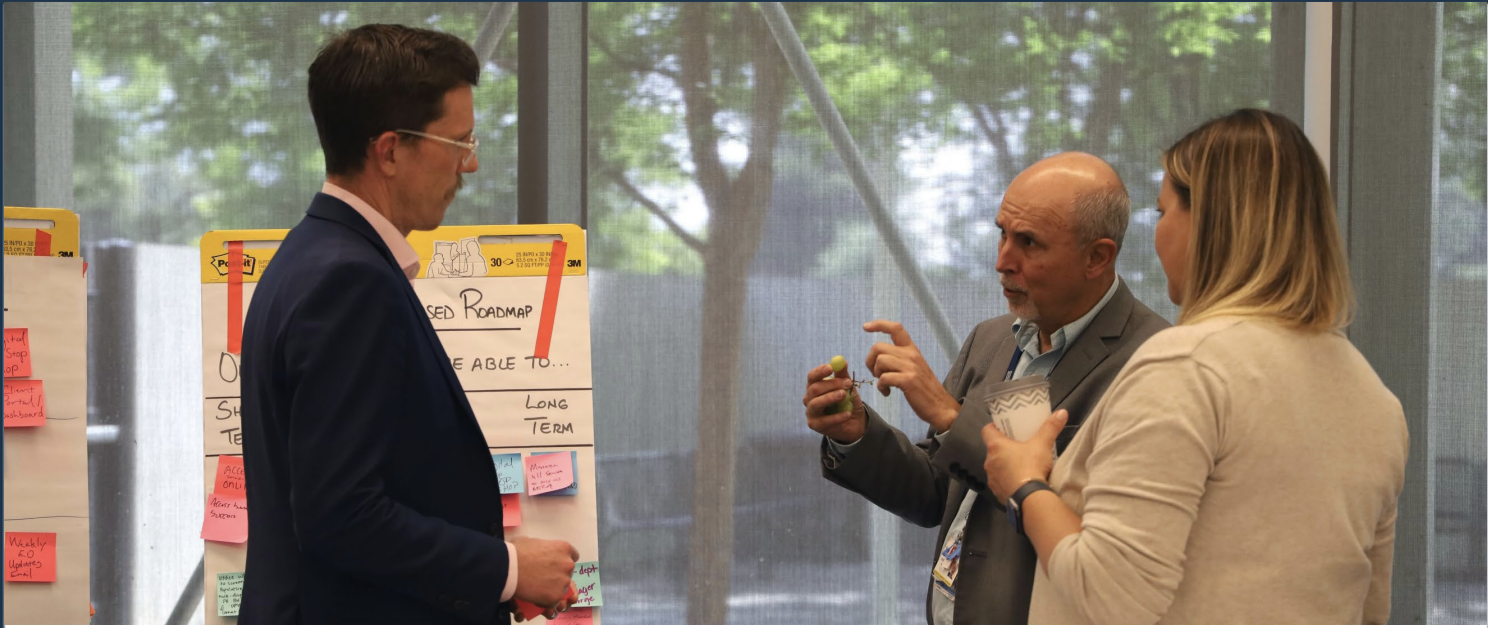
My job was to design how those leaders get to clarity. I owned the engagement strategy, workshop architecture, and facilitation for sessions where executives, engineers, and operators had to leave aligned on what to build and why.
Why this matters: The value I created wasn't in wireframes. It was in walking into a room of 15 stakeholders who disagreed about the problem and walking out with a scoped MVP and executive commitment to fund it.
Design strategy across the full engagement lifecycle
Before the room
Stakeholder research, landscape mapping, assumption auditing. Understanding power dynamics before designing the session.
In the room
Facilitating C-suite workshops and prioritization exercises. Managing competing agendas in real time. Moving groups from divergence to decision.
After the room
Synthesizing outputs into roadmaps and delivery plans. Scoping MVPs. Ensuring alignment held through the transition to execution.
Across the practice
Built repeatable engagement frameworks adopted across IBM teams. Evolved the methodology over 100+ engagements across AI, healthcare, and government.
Four phases that turn complexity into commitment
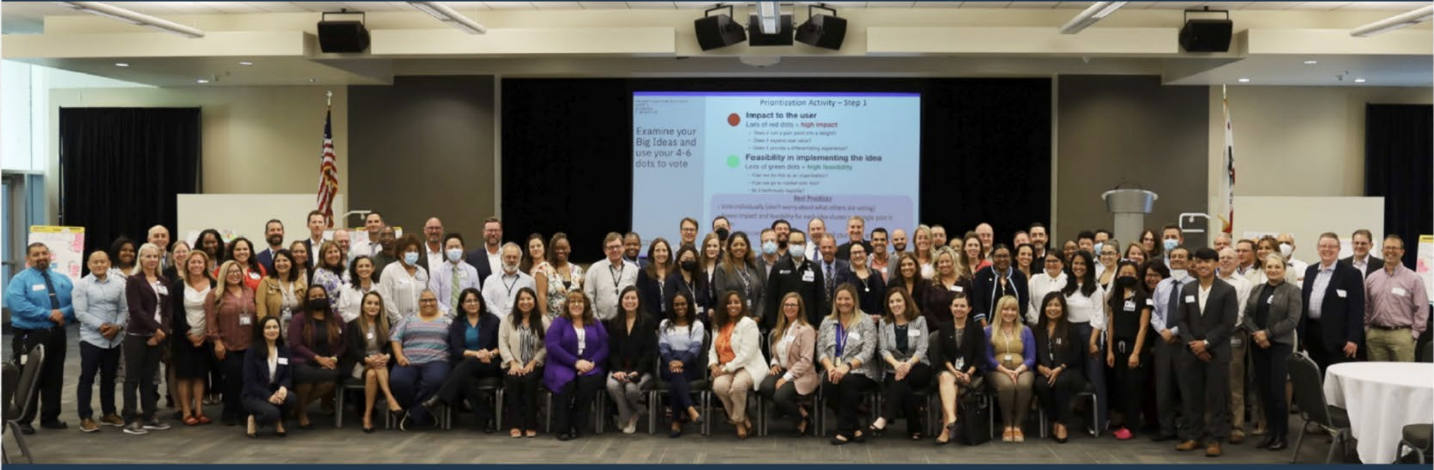
Every engagement followed a core arc adapted from IBM's Enterprise Design Thinking framework. I designed which tools were used when, and evolved the approach across 100+ engagements. Click any tool to see how it works.
Map the Terrain
Map the stakeholder landscape, surface assumptions, and understand what each party thinks the problem is. The real brief almost never matches the stated brief.
Reframe the Brief
Push past the stated problem to the real one. Articulate what the organization actually needs, not just what they asked for.
Design the Session Arc
Architect who's in the room, what sequence of activities moves them from divergence to commitment, and where the hard conversations happen.
Commit
Scoped MVP, phased roadmap, named owners, funded next steps. The engagement isn't done when the workshop ends. It's done when the organization commits.
"Jeff knows how to redirect and guide an engagement. He has a vision of where the conversation needs to go and is very good at helping build that path."
"Jeff's skill at being disarmingly candid in a variety of situations and power relationships is done with such ease and piercing insight. His communication skills and ability to speak to anyone's level has been appreciated by my team and leadership."
Three engagements that show the range
Turning an EV mandate into a $10M AI-powered implementation roadmap
A public utility needed to electrify its fleet by mandate but had no roadmap and no cross-agency alignment. I ran discovery workshops with engineers, data scientists, and government stakeholders, scoped the AI-powered charging MVP, and delivered the implementation roadmap. Later used internally as an IBM business development case study.
From executive insight to validated MVP: an AI scheduling tool
The real problem wasn't obvious from the brief. I ran business framing with executives and frontline users, surfacing the operational disconnects behind the bottleneck. That research informed an AI scheduling tool we took from insight to validated MVP.
Pushing back on assumptions to find the real problem
The team was ready to design from assumptions. I pushed for on-site ethnographic research, which reframed the entire brief: the solution wasn't a workflow tool, it was a machine vision system. The reframe turned a stalled engagement into a funded project.
What four years of enterprise facilitation taught me
The pattern across 100+ engagements: the stated problem is almost never the real problem, the people in the room matter more than the method on the wall, and alignment without commitment is theater.
The most valuable skill I built at IBM was reading a room of senior stakeholders in the first fifteen minutes, finding where the real tension lives, and designing the conversation so that tension becomes productive. That doesn't show up in a wireframe. It shows up in the fact that the thing got built.
The hardest part of enterprise transformation is never the technology. It's getting a room full of people who see the problem differently to agree on what to do about it, and then actually do it. That's the work I design for.