Defining Purpose and Values for a 7,000-Person Company After a $550M Acquisition
Target acquired Shipt, and two cultures needed to become one. As a senior strategist on a five-person team, I ran interviews, led synthesis sessions, built strategic frameworks, and designed the executive workshop that aligned leadership around a purpose and values framework adopted across 7,000 employees.
Two cultures. No shared identity.
Target acquired Shipt in 2018. What followed was a collision of cultures: the scrappy Birmingham startup, the San Francisco tech office, and the new corporate parent. The CEO and C-suite brought a question to our team that went deeper than brand: what actually holds this company together now, and what should 7,000 employees believe about why they come to work?
Why this matters: You can't fabricate purpose and values. You have to discover them, which meant going to the people who lived the culture, not the people who managed it.
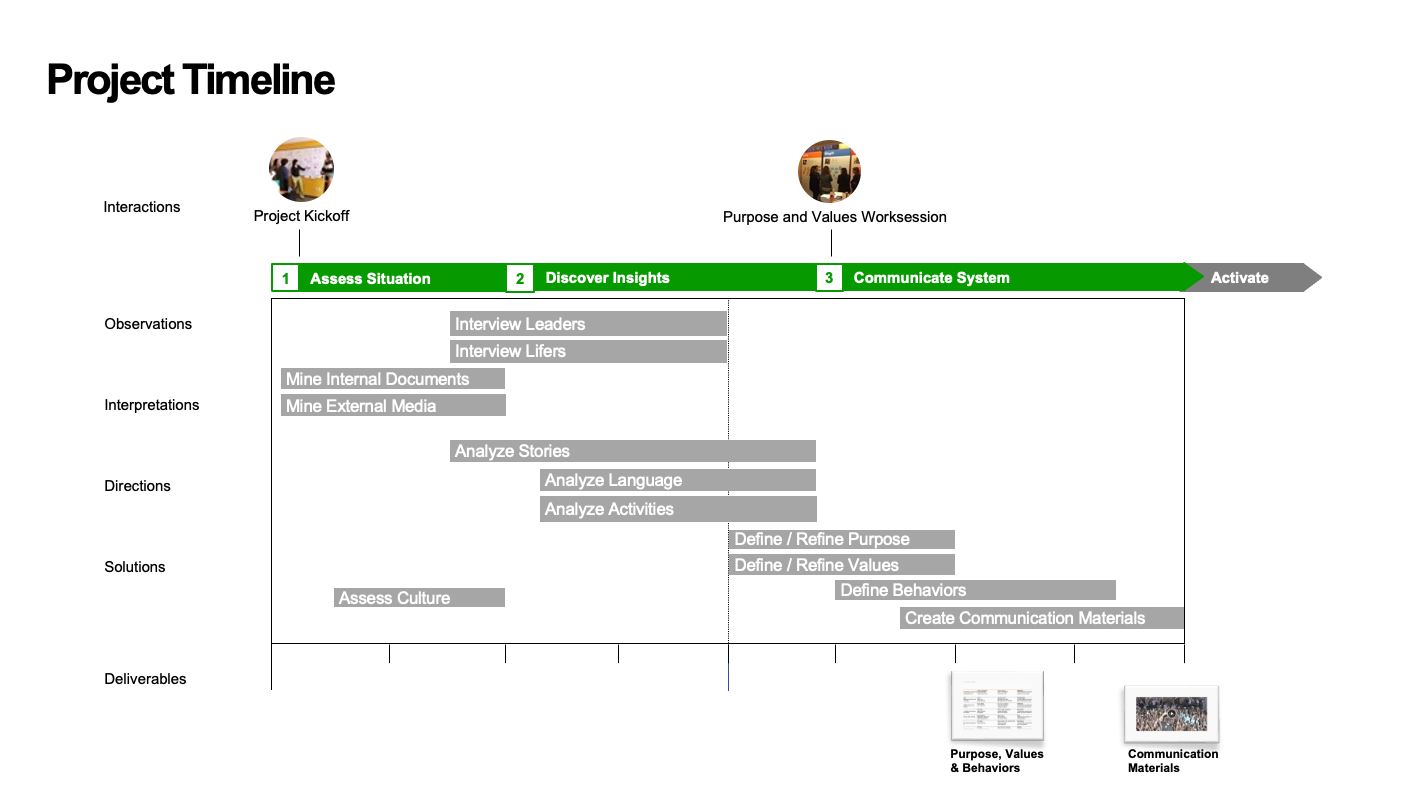
Three phases, one framework
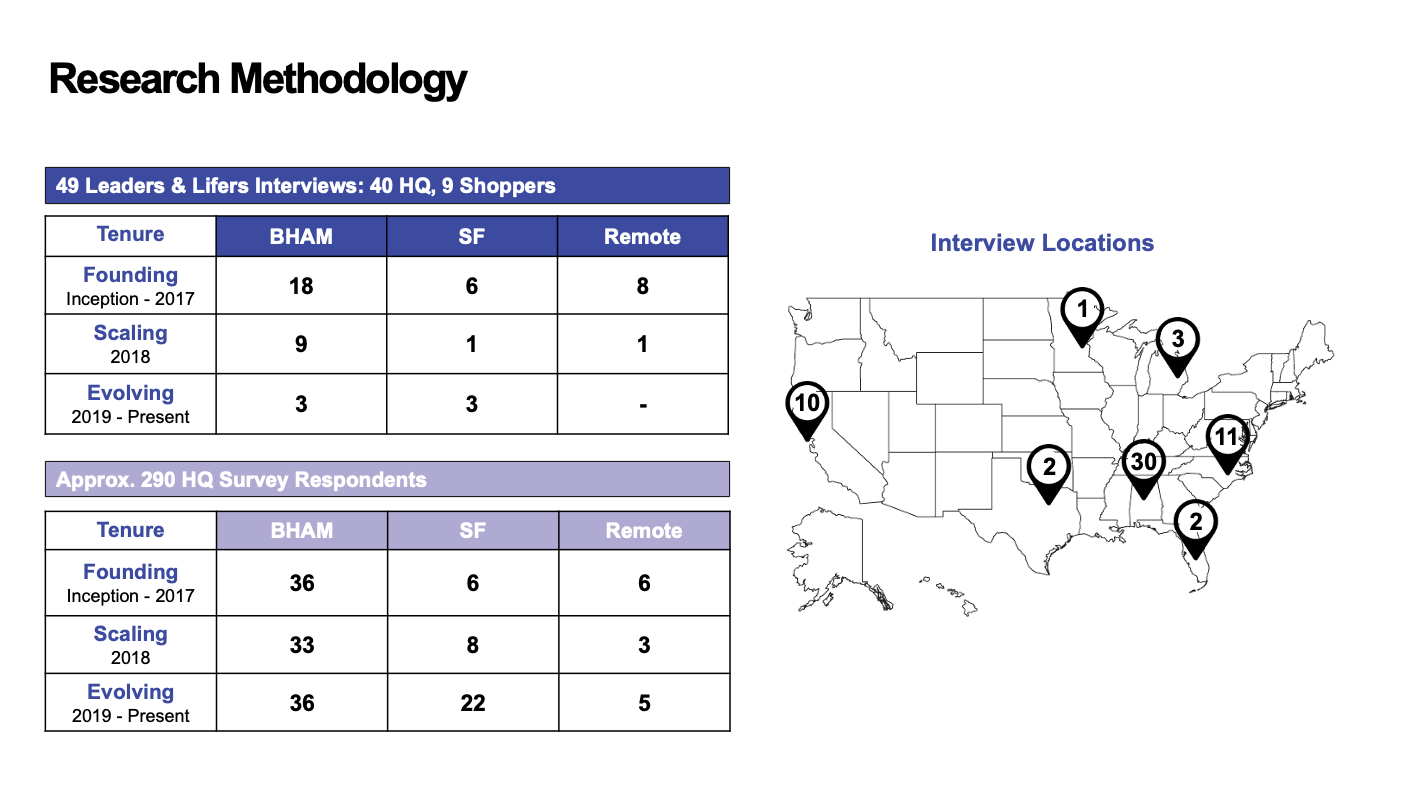
Our five-person team designed and executed a mixed-methods research program, heavily qualitative but supported by survey data from roughly 290 HQ respondents. I conducted many of the one-on-one interviews with leaders and long-tenure employees ("Lifers") across Birmingham, San Francisco, and remote locations, and was a key contributor to synthesis and content creation. We segmented respondents by era: Founding (to 2017), Scaling (2018), and Evolving (2019+), which let us see how the company's identity had shifted as it grew.
Immersion & Landscape
In-depth interviews across eras and locations. Internal document mining and external media analysis. Mapped the cultural landscape and the gap between how Shipt talked about itself and how employees experienced it.
Synthesis & Reframing
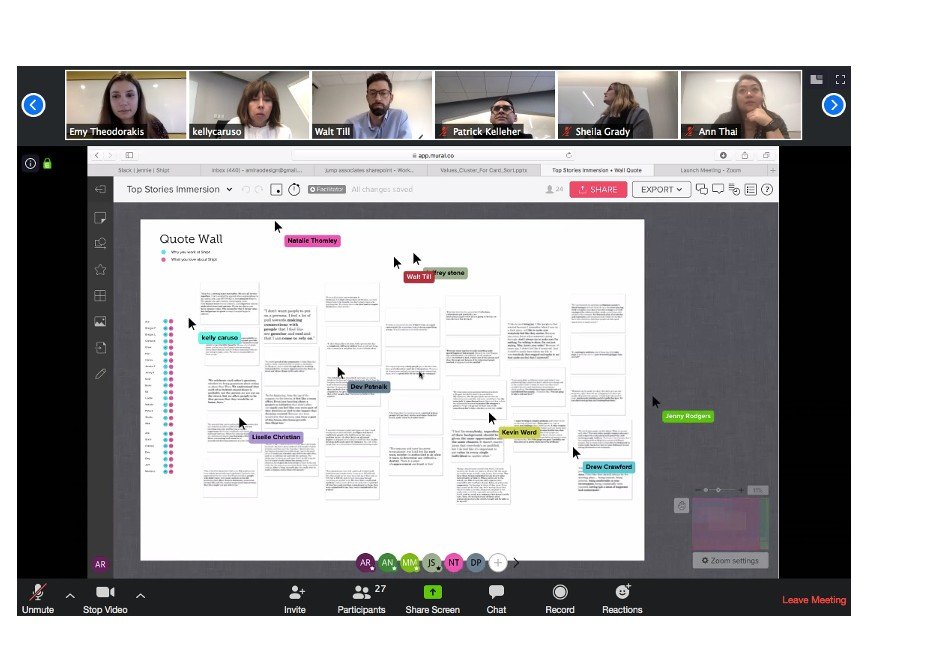
Analyzed stories, language, and activities across all inputs. Clustered themes. Identified the emotional core that held across eras, roles, and locations.
Alignment & Activation
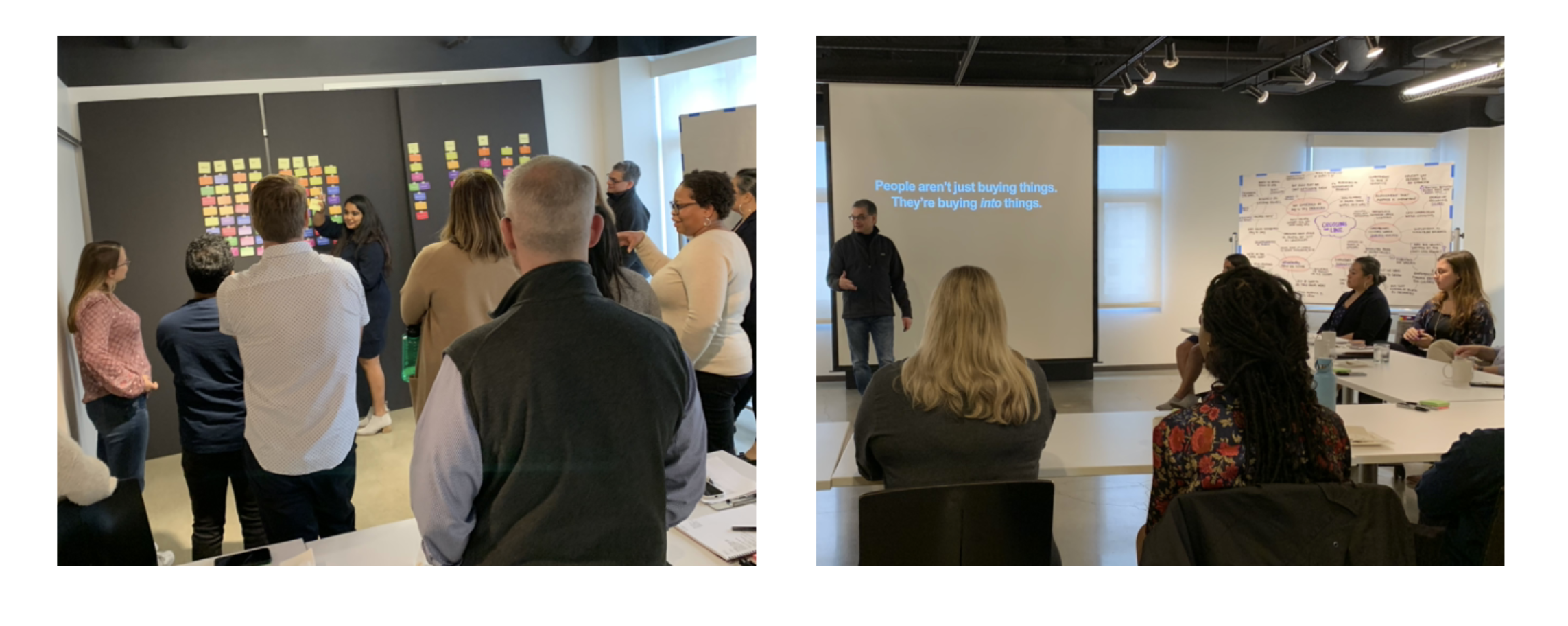
I designed the executive workshop and its activities. Presented findings to leadership, built buy-in, and finalized the purpose and values framework.
What makes a Shopper jump a fence to deliver an order?
The research surfaced a pattern leadership hadn't articulated: Shipt's culture wasn't built on efficiency or logistics. It was built on a belief that small moments of personal connection actually mattered. A Shopper calling a member's daughter to check in. A teammate rallying to cover during a disaster. The company's identity was relational, not transactional.
That insight reframed the deliverable. The purpose couldn't be about delivery. It had to be about connection.
What makes Shipt different from every other company?
Across 49 interviews, employees answered this question the same way: not with strategy or logistics, but with stories about people going beyond what was expected for someone they'd never met. The research revealed something leadership sensed but hadn't named. We helped them articulate it, and anchor it in a purpose and values framework built to outlast any single leader or strategy cycle.
Shipt's Manifesto
We believe that a company can be more than just a group of people working hard to make money. We believe that the work we do matters.
We believe that every person, no matter who they are, has a unique and special value. That's something you can't ever take away, but it's something that's easy to forget.
When you reach out to people with caring and authenticity, when you show up in a way that's true to who you are and accepting of who they are, you get a chance to remind people of the unique value they have. When we're at our best, we do more than deliver groceries. We create the kinds of authentic connections that show people they actually matter.
Not because we said so. But because it's true.
Five values, grounded in real behavior
Each value was derived from employee stories, not aspirational language. We defined each with behavioral examples so any employee could recognize it in action.
Drive
Always pushing forward and finding ways to contribute
Rally
Coming together quickly to meet a challenge
Positivity
Having an optimistic energy that lifts up the team
Authenticity
Being true to yourself and accepting of others
Caring
Staying attuned to other people and doing right by them
Downstream impact: The purpose statement became Shipt's public-facing identity. Progressive Grocer described the company as "guided by its purpose to spark connections to show how every person counts" when covering Shipt's growth to 5,000+ cities. The framework also became the foundation for Shipt's inaugural DEI strategy, employee resource groups, and community investment pillars.
What this project taught me about organizational change
Purpose and values work can easily become wallpaper. This one stuck because every word was grounded in stories employees already told each other. We didn't invent language. We listened for it.
The virtual executive workshop wasn't a readout. It was designed so leadership could see their own people's words reflected back and feel ownership over the result before it reached the broader organization.